Showing posts with label Spain. Show all posts

Wednesday, September 16, 2020

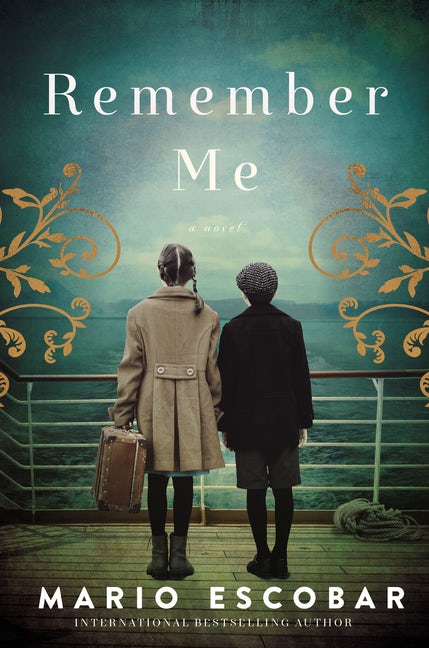
Blog Tour Spotlight: Remember Me by Mario Escobar


Remember Me: A Spanish Civil War Novel by Mario Escobar

Publication Date: September 15, 2020
Thomas Nelson
Paperback & eBook; 384 pages
Genre: Historical Fiction


Amid the shadows of war, one family faces an impossible choice that will change their lives forever.

Madrid, 1934. Though the Spanish Civil War has not yet begun, the streets of Madrid have become dangerous for thirteen-year-old Marco Alcalde and his younger sisters, Isabel and Ana. When Marco’s parents align themselves against General Franco and his fascist regime, they have no inkling that their ideals will endanger them and everyone they love—nor do they predict the violence that is to come.

When the Mexican government promises protection to the imperiled children of Spain, the Alcaldes do what they believe is best: send their children, unaccompanied, across the ocean to the city of Morelia—a place they’ve never seen or imagined. Marco promises to look after his sisters in Mexico until their family can be reunited in Spain, but what ensues is a harrowing journey and a series of heartbreaking events. As the growing children work to care for themselves and each other, they feel their sense of home, family, and identity slipping further and further away. And as their memories of Spain fade and the news from abroad grows more grim, they begin to wonder if they will ever see their parents again or the glittering streets of the home they once loved.

Based upon the true stories of the Children of Morelia, Mario Escobar’s Remember Me—now available for the first time in English—explores the agony of war and paints a poignant portrait of one family’s sacrificial love and endurance.

Amazon | Barnes and Noble | IndieBound


About the Author


Mario Escobar Golderos has a degree in History, with an advanced studies diploma in Modern History. He has written numerous books and articles about the Inquisition, the Protestant Reformation, and religious sects. He is the executive director of an NGO and directs the magazine Nueva historia para el debate, in addition to being a contributing columnist in various publications. Passionate about history and its mysteries, Escobar has delved into the depths of church history, the different sectarian groups that have struggled therein, and the discovery and colonization of the Americas. He specializes in the lives of unorthodox Spaniards and Americans.


Website | Facebook | Twitter | Goodreads


Blog Tour Schedule


Tuesday, September 15 Review at Nursebookie Review at WTF Are You Reading? Wednesday, September 16 Review at Amy's Booket List Feature at Let Them Read Books Friday, September 18 Review at 100 Pages a Day Saturday, September 19 Feature at The Green Mockingbird Monday, September 21 Feature at The Lit Bitch Feature at I'm All About Books Wednesday, September 23 Review at Passages to the Past Friday, September 25 Review at View from the Birdhouse Saturday, September 26 Feature at Bookworlder Sunday, September 27 Review at Reading is My Remedy Monday, September 28 Review at Hallie Reads Tuesday, September 29 Feature at What Is That Book About

Tuesday, January 14, 2020

Blog Tour Review: Salt the Snow by Carrie Callaghan

From the Back Cover:

American journalist Milly Bennett has covered murders in San Francisco, fires in Hawaii, and a civil war in China, but 1930s Moscow presents her greatest challenge yet. When her young Russian husband is suddenly arrested by the secret police, Milly tries to get him released. But his arrest reveals both painful secrets about her marriage and hard truths about the Soviet state she has been working to serve. Disillusioned and pulled toward the front lines of a captivating new conflict, Milly must find a way to do the right thing for her husband, her conscience, and her heart. Salt the Snow is a vivid and impeccably researched tale of a woman ahead of her time, searching for her true calling in life and love.

My Thoughts:

I was really looking forward to reading this book. A pioneering reporter in a dangerous locale, going up against a terrifying regime to fight for justice and save the people she loves--sign me up. But unfortunately I had some issues with this story that prevented me from loving it as I'd hoped I would.

For starters, it's got a pretty slow-moving plot. There were long stretches where I felt like not much happened, and I found myself skimming to get to the more interesting parts. I'm also not sure the dual timeline structure served the story well. There's not much distance between the timelines as they alternate between the time Milly met her husband and the aftermath of his arrest, and so by the time they converged, it all sort of seemed anti-climactic.

But the biggest issue, for me, was Milly herself. I don't usually read up on unknown-to-me historical figures before I read novels about them because I like to be surprised by what's coming and go in without any preconceptions, but in this case, maybe I should have. Because it took me a really long time to warm up to Milly Bennett. She's selfish. She's a bit of a lush. She sleeps with married men. She does some other things that some readers may find morally questionable. But hardest for me was that she's a die-hard supporter of communism (though it is called socialism at the time). I understand the novelty of it during the Great Depression and the allure the ideal held for Americans who went to the Soviet Union in search of a better life. But very few of them actually found a better life there. Even in the face of desperate poverty, the lack of food, heat, and basic necessities, forced communal living, forced labor, and a tyrannical government jailing people who say things they don't like, Milly still defends the system. I found her very hard to empathize with until more than halfway through the book. Eventually Milly does lift the veil of idealism, and more of her underlying vulnerability comes through, allowing the reader to better understand why she behaves the way she does and to feel sorry for her in the situation she finds herself in. I finally started to feel her highs and lows, her triumphs and tragedies as my own and became invested in the outcome of her story.

Tuesday, June 19, 2018

Blog Tour Review: Breathless by Celeste Bradley and Susan Donovan

From the Back Cover:

She was "the Swan." London's premiere courtesan. Men want to be with her. Women loathe her success and yet admire her beauty, her riches, her independence. But when the jealous wife of her lover moves to have the Swan banished from her home on the high seas, she winds up crashed against Spain's rocky coast with no shoes, no clothesand no name. Taken in by a tortured, sensuous man known as The Artist, the Swan comes to know the woman she wants to be—her artist's siren.

When Art Professor Brenna Anderson is in danger of losing her post at Harvard, the rule-following, prim professor is at a loss of how to salvage the shreds of her life. But when a new painting in the mysterious Siren collection is discovered in a dusty old house in France, Brenna does the unthinkable—hops on a plane to uncover the identity of the beautiful, enigmatic woman who is the subject of the paintings.

There's just one hitch—the frustrating, irritating, bold and beautiful art hunter, Fitch Wilder, is also looking for the Siren. He's been a thorn in Brenna's professional side for years, but when their individual quests lead them to team up despite being enemies, a whole new sumptuous world of art and culture opens up for the two of them. And with it, they enter a realm of passion and love…

My Thoughts:

I signed up to review Breathless on impulse and then chastised myself because I needed another review commitment like I need a hole in my head, but I'm so glad I did! This will end up being one of my favorite books of the year. I'm not going to delve much into plot because the blurb does a good job of teasing you and I want everybody to be able to discover the story for themselves and savor every minute of it, like I did.

I was instantly drawn into the story with the discovery of a painting in an old Paris apartment by a handsome hunk of a cowboy who has a passion for art. Fitch's sense of amazement and excitement at finding an unknown painting in the famous Siren series was palpable, and I loved how the story of the Swan (aka the Siren) and her lover, the Artist, was teased out as Brenna and Fitch hunted down clues to her identity in the hopes of finding more paintings. And I loved watching enemies turn to lovers as these two became so wrapped up in the mystery, in the adventure, and in each other.

It's rare that I end up liking both the past and present storylines equally in a book with dual timelines. Usually the balance tips in favor of the past, but in this case I really enjoyed reading both. In both storylines the heroine is forced to reinvent herself, and I thought the Swan's rediscovery of herself particularly poignant. In order to find herself again, she had to lose everything, including her memories.

One of the best aspects of this book is the setting. Barcelona and the Catalonia coast are so atmospheric and so central to the story that the setting becomes a character itself. The lush descriptions of architecture, scenery, the simple yet delicious food, the infectious joie de vivre of the locals, the music, the dancing . . . well let's just say I HAVE to visit that region now!

There are a few little things I could quibble about in regards to the story, but I so thoroughly enjoyed it, was so swept away by the ambiance and the mystery, and was so battered by the emotional wringer (seriously, I sobbed buckets; no spoilers, but be prepared for the absolute unfairness of fate before the happily ever after) that those quibbles aren't worth detailing.

I could not put this book down, wanting desperately to see how it would all play out yet not wanting it to end. I savored the mystery and the love stories and completely lost myself in Catalonia. Breathless is a fabulous reading experience for fans of romance, art, history, and the heady magic of the Mediterranean.

My Rating:  5 Stars out of 5


GIVEAWAY!

Tuesday, June 12, 2018

Blog Tour Excerpt: Chasing the Wind by C.C. Humphreys

CHASING THE WIND BY C.C. HUMPHREYS

Publication Date: June 5, 2018
Paperback & eBook; 320 Pages
Genre: Historical/Women’s Fiction/Mystery


Smuggler. Smoker. Aviatrix. Thief. The dynamic Roxy Loewen is all these things and more, in this riveting and gorgeous historical fiction novel for readers of Paula McLain, Roberta Rich, Kate Morton and Jacqueline Winspear.

You should never fall in love with a flyer. You should only fall in love with flight.

That’s what Roxy Loewen always thought, until she falls for fellow pilot Jocco Zomack as they run guns into Ethiopia. Jocco may be a godless commie, but his father is a leading art dealer and he’s found the original of Bruegel’s famous painting, the Fall of Icarus. The trouble is, it’s in Spain, a country slipping fast into civil war. The money’s better than good–if Roxy can just get the painting to Berlin and back out again before Reichsmarshall Hermann Göring and his Nazi pals get their hands on it . . .

But this is 1936, and Hitler’s Olympics are in full swing. Not only that, but Göring has teamed up with Roxy’s greatest enemy: Sydney Munroe, an American billionaire responsible for the death of her beloved dad seven years before. When the Nazis steal the painting, Roxy and Jocco decide that they are just going to have to steal it back.

What happens when Icarus flies too close to the sun? Roxy is going to find out. From African skies to a cellar in Madrid, from the shadow cast by the swastika to the world above the clouds on the Hindenburg’s last voyage, in the end Roxy will have just two choices left–but only one bullet.

Excerpt:

There’s nothing like dying to make a girl appreciate living.

As she stared down into the pitiless black of the night, seeking, forever seeking, the one pinpoint of light that might yet save her— but it had better hurry up—Roxy Loewen thought about what was waiting for her.

A straw-roofed hut with a tin bath filled with tepid water on its third use that would feel like a clawfoot tub at the Plaza. Rum so raw it hurt your eyes but when mixed with tamarind juice would taste like a Negroni at the Ritz. Steak from a camel or an ass surpassing the finest filet mignon that Rex’s 110th Street chop house could serve.

And at the end of all those, a German. Jochen Zomack—Jocco— with his big hands and his big laugh and the hank of brown hair that, when he let it fall over his face just so and in the right light, made him look like Cary Grant. Jocco, down there somewhere, scanning the black skies as she scanned the black ground, ready with his light.

If her message had gotten through. Communications had been sketchy since the Italians had begun what many were saying would be their final offensive. The gallant, heavily outgunned Ethiopians— guns, hell, a lot of them still fought with spears—would make their last stand against the invader near their capital, Addis Ababa.

The rumours had decided her. To fly her cargo of rifles west into that war zone was suicide. If the Italians didn’t shoot her out of the sky, there probably wouldn’t be an airfield left to land on. The one where she waited at Malco Dube would also be bombed again. Even if her Lockheed 227—Asteria 6, Roxy called her—wasn’t hit on the ground, there wouldn’t be enough time to fill in the craters on the runway that was already more gopher burrow than the racetrack it once had been. But if she could get her cargo to Jocco, he’d know what to do with it. He’d know where some of his comrades might still be fighting. He had run guns all over this continent. All over the world, truly. Hell, he might even get her paid. Though it wasn’t so much the money she’d been thinking of as she’d taken off from the foothills of the mountains and headed toward a moon just peeking in the east. It was him. Lying with him. There was a time she might have blushed at that thought. But she didn’t blush so much anymore.
Night fell fast this close to the equator, but the moon was a day off full and that had given her hope. Three hours’ flight and a landing by moonlight? She’d done that before, half a dozen times.

What she hadn’t reckoned on were the thick cumulus clouds rolling in from the Indian Ocean. She was under them now, halfway between the ceiling and the floor about two hundred feet below her. Flying star quadrants, covering ground above what she hoped was still the airfield at Dubaro. There were no lights. Italian pilots were so bored they would drop a bomb on a fella lighting a cheroot in his cupped hand. The terrain was featureless enough in daylight—arid, scrubby hills or thick jungle, especially this close to the coast. At night there was . . . nothing.

Tuesday, March 18, 2014

Blog Tour Interview: Pilgrim Footprints on the Sands of Time by Sylvia Nilsen

Please join me in welcoming author Sylvia Nilsen to Let Them Read Books! Sylvia is touring the blogosphere with her debut historical fiction novel, Pilgrim Footprints on the Sands of Time, romance and intrigue set on a pilgrimage trail from England to Spain in the turbulent twelfth century. I worked with Sylvia in designing the cover of Pilgrim Footprints, and I'm happy to have her here today talking about the inspiration for her novel and what the Camino pilgrimage trail means to her. Read on for a chance to win a copy of Pilgrim Footprints on the Sands of Time!

Hi Sylvia! Thanks for taking the time to appear on Let Them Read Books!

It is a pleasure.

You have devoted a good portion of your life to the Camino de Santiago. Can you tell us how the pilgrimage route became so important to you?

I first walked 800 km of the route known as the Camino Frances in northern Spain in 2002. I was very fit and walked long stages, completing the walk from the French Pyrenees to Santiago de Compostela in 27 days. This meant walking an average of 30 km per day, although some days were a bit shorter and others much longer.

When I returned home, the Confraternity of St. James of South Africa, which had been established in Cape Town the year before, asked if I would be the local representative in my Province. At our first pilgrim get-together, 12 people came. They told dreamy-eyed stories of communal dinners in lamp light, having their feet washed at pilgrim blessings, and about places I honestly didn’t remember seeing! I was determined to go back, walk slower, and experience these special pilgrim places.

I have returned to the trail – and have done a few other routes – seven times in the last 12 years. I have served in pilgrim shelters, trained South African pilgrims to volunteer in pilgrim shelters, and started a small company that takes pilgrims on the Camino Frances. Writing about the Camino has consolidated all that I know and love about the Camino.

Monday, March 17, 2014

Blog Tour Review: The Debt of Tamar by Nicole Dweck

From the Back Cover:

During the second half of the 16th century, a wealthy widow by the name of Doña Antonia Nissim is arrested and charged with being a secret Jew. The punishment? Death by burning. Enter Suleiman the Magnificent, an Ottoman "Schindler," and the most celebrated sultan in all of Turkish history. With the help of the Sultan, the widow and her children manage their escape to Istanbul. Life is seemingly idyllic for the family in their new home, that is, until the Sultan's son meets and falls in love with Tamar, Doña Antonia's beautiful and free-spirited granddaughter. A quiet love affair ensues until one day, the girl vanishes. 

Over four centuries later, thirty-two year old Selim Osman, a playboy prince with a thriving real estate empire, is suddenly diagnosed with a life-theatening condition. Abandoning the mother of his unborn child, he vanishes from Istanbul without an explanation. In a Manhattan hospital, he meets Hannah, a talented artist and the daughter of a French Holocaust survivor. As their story intertwines with that of their ancestors, readers are taken back to Nazi-occupied Paris, and to a seaside village in the Holy Land where a world of secrets is illuminated. 

Theirs is a love that has been dormant for centuries, spanning continents, generations, oceans, and religions. Bound by a debt that has lingered through time, they must right the wrongs of the past if they're ever to break the shackles of their future.

My Thoughts:

I've read several books in recent years about the persecution and subsequent expulsion of the Jews from Spain, and all of them ended with the central Jewish characters leaving, though none said where they were going. So I was left wondering: Where did the Jews go when they were forced out of Spain? This book gave me an answer: the Ottoman Empire. Aha! This story begins with two young people whose privileged world is upended when they discover that the Christian lives they've been living do not reflect their true heritage. But embracing their secret Jewish ancestry and faith places them in danger as the inquisition sweeps through, and they are forced to flee to Istanbul, where they find shelter under Suleiman the Magnificent's rule. The couple's daughter, Tamar, is raised and educated among the Sultan's harem, where she forms a close friendship with Suleiman's grandson, Murat, that blossoms into love. But just as Murat is coming into manhood and preparing to step into his role as the next ruler of the Ottoman Empire, with his beloved Tamar at his side, Tamar disappears. Devastated and unaccepting, Murat consults a seer who tells him that he and Tamar are destined to be together again, and thus Murat devotes much of his life to finding his lost love, and going a bit mad in the process, giving rise to whispers of a Sultan's Curse that will plague generations of his descendants. The rest of the story follows various descendants of both Murat and Tamar as their souls search for each other throughout the ages.

Monday, March 10, 2014

Blog Tour Review: The Mapmaker's Daughter by Laurel Corona

From the Back Cover:

A sweeping novel of 15th-century Spain explores the forgotten women of the Spanish Inquisition

In 1492, Amalia Riba sits in an empty room, waiting for soldiers to take her away. A converso forced to hide her religion from the outside world, She is the last in a long line of Jewish mapmakers, whose services to the court were so valuable that their religion had been tolerated by Muslims and Christians alike.

But times have changed. When King Ferdinand and Queen Isabella conquer Granada, the last holdout of Muslim rule in Spain, they issue an order expelling all Jews who refused to convert to Christianity. As Amalia looks back on her eventful life, we witness history in the making—the bustling court of Henry the Navigator, great discoveries in science and art, the fall of Muslim Granada, the horrors of the Spanish Inquisition. And we watch as Amalia decides whether to relinquish what’s left of her true self, or risk her life preserving it.

My Thoughts:

The Mapmaker's Daughter tells the story of Amalia Riba, a fictional character who bears witness to the tragic path that leads from the persecution to the expulsion of Jews on the Iberian Peninsula in the latter half of the fifteenth century. She lives a long and eventful life during a turbulent period in history, and along the way she rubs elbows with some of the most famous historical figures of the time, from her childhood on the fringes of Prince Henry the Navigator's court, to tutoring a young Isabella of Castile and bearing witness to Torquemada's inquisition. I was taken with Amalia from the beginning, when we meet her as a small child living as a converso, a person of Jewish descent who lives openly as a Christian. But her mother and grandmother cling to their Jewish heritage, praying and performing rituals in secret, and Amalia embraces this part of her ancestry, cherishing the closeness she feels to these women in their moments of faith. But the world is changing around Amalia, and it becomes more and more dangerous to practice the old faith. As she matures into a young woman, torn between her outward and inward displays of faith, Amalia constantly questions what it means to be a Jew, what it means to be a Christian, and how she can be true to herself in a world where doing so could mean her death.

Thursday, June 28, 2012

Blog Tour Review: The Queen's Vow by C.W. Gortner


From the Back Cover:

No one believed I was destined for greatness.

So begins Isabella’s story, in this evocative, vividly imagined novel about one of history’s most famous and controversial queens—the warrior who united a fractured country, the champion of the faith whose reign gave rise to the Inquisition, and the visionary who sent Columbus to discover a New World. Acclaimed author C. W. Gortner envisages the turbulent early years of a woman whose mythic rise to power would go on to transform a monarchy, a nation, and the world. 

Young Isabella is barely a teenager when she and her brother are taken from their mother’s home to live under the watchful eye of their half-brother, King Enrique, and his sultry, conniving queen. There, Isabella is thrust into danger when she becomes an unwitting pawn in a plot to dethrone Enrique. Suspected of treason and held captive, she treads a perilous path, torn between loyalties, until at age seventeen she suddenly finds herself heiress of Castile, the largest kingdom in Spain. Plunged into a deadly conflict to secure her crown, she is determined to wed the one man she loves yet who is forbidden to her—Fernando, prince of Aragon.

As they unite their two realms under “one crown, one country, one faith,” Isabella and Fernando face an impoverished Spain beset by enemies. With the future of her throne at stake, Isabella resists the zealous demands of the inquisitor Torquemada even as she is seduced by the dreams of an enigmatic navigator named Columbus. But when the Moors of the southern domain of Granada declare war, a violent, treacherous battle against an ancient adversary erupts, one that will test all of Isabella’s resolve, her courage, and her tenacious belief in her destiny.

From the glorious palaces of Segovia to the battlefields of Granada and the intrigue-laden gardens of Seville, The Queen’s Vow sweeps us into the tumultuous forging of a nation and the complex, fascinating heart of the woman who overcame all odds to become Isabella of Castile.


My Thoughts:

I'll tell you right off the bat that I did not know much about Isabella of Castille before reading The Queen's Vow, though she had been a minor character in one or two novels I'd read and had not been portrayed very favorably. I knew she was responsible for religious persecution and the discovery of the New World, and that she's a controversial historical figure who has her share of lovers and haters. What I'm trying to say is that I'm not qualified to judge if this is an accurate portrayal of her, and I do suspect that her relationship with Fernando has been romanticized a bit  in this story . . . but I don't care! This was a fantastic read and one of the best historical fiction novels I've read this year!

Tuesday, May 10, 2011

Teaser Tuesday + Review: By Fire, By Water by Mitchell James Kaplan

Teaser Tuesdays is a weekly bookish meme, hosted by MizB of Should Be Reading. Anyone can play along! Just do the following:


Grab your current read
Open to a random page
Share two "teaser” sentences from somewhere on that page

BE CAREFUL NOT TO INCLUDE SPOILERS! Share the title & author, too, so that others can add the book to their TBR Lists!


This week my teaser comes from a book I recently read and enjoyed, By Fire, By Water by Mitchell James Kaplan, which has just won the 2011 Gold Medal Independent Publisher Book Award for Best Historical Fiction! I wanted to share this teaser because I think, in one simple sentence, it embodies the essence of the very complex main character, Luis Santangel, and the simplistic elegance with which this novel was written. From page 242:


By Fire, By WaterShe had misjudged him. She had thought him a Christian and therefore unworthy of her trust. Tonight he was neither Christian nor Jew but simply a man.


By Fire, By WaterFrom the Back Cover:

Luis de Santángel, chancellor to the court and longtime friend of the lusty King Ferdinand, has had enough of the Spanish Inquisition. As the power of Inquisitor General Tomás de Torquemada grows, so does the brutality of the Spanish church and the suspicion and paranoia it inspires. When a dear friend’s demise brings the violence close to home, Santángel is enraged and takes retribution into his own hands. But he is from a family of conversos, and his Jewish heritage makes him an easy target. As Santángel witnesses the horrific persecution of his loved ones, he begins slowly to reconnect with the Jewish faith his family left behind. Feeding his curiosity about his past is his growing love for Judith Migdal, a clever and beautiful Jewish woman navigating the mounting tensions in Granada. While he struggles to decide what his reputation is worth and what he can sacrifice, one man offers him a chance he thought he’d lost…the chance to hope for a better world. Christopher Columbus has plans to discover a route to paradise, and only Luis de Santángel can help him.

My Thoughts:

By Fire, By Water tells the story of Luis Santangel, a powerful man who holds the pursestrings and the ear of King Ferdinand, yet is powerless to help his ancestors' people, and even his own family, in the face of the New Inquisition and a queen's religious fanaticism. Spain in the late fifteenth century is a place where Christians, Jews, and the remnants of the Muslim empire share a tenuous coexistance, but the flames of the Inquisition are spreading, leaving fear, paranoia, and hatred in their shadows. As a converso, a Christian of Jewish descent, Luis has to be more careful than most. But he is curious about the faith his grandparents practiced, and why it inspires such fear and hatred in the Catholics. His quest for knowledge with a small, secret group of scholars sets him on a dangerous path that ultimately leads to murder, betrayal, and tragedy as the Inquisition turns its eyes to those closest to the royal household.

Along that path, Luis's story becomes intertwined with that of Judith Migdal, a lovely Jewish spinster in the Muslim kingdom of Granada who takes on the burden of supporting her brother's family after his murder. Judith learns the silversmith trade, and after years of hard work finally finds financial success, and love, only to lose it all when the king and queen expel the Jews from Spain. Luis's path also merges with that of his good friend Christophe Colombo (Christopher Columbus) as he engages Luis's help in funding an expedition to discover paradise, and religious freedom.

In his author's note, Kaplan calls Luis the prototype of the modern man, and I was struck by that, because as I'd been reading I'd admired the many different facets of Luis and his struggle to reconcile his need for information and fulfillment with his sense of honor and justice, and the much stronger and very human instinct to survive. This is a well-crafted, poignant story of one man's journey of self-discovery and survival; beautifully written with a simple, yet elegant style, and a subtle attention to detail that immerses the senses in fifteenth century Spain. A worthy addition to any historical fiction fan's reading list.

My Rating:  4.5 Stars out of 5

*Please note: This review references an advance copy received from the publisher, and therefore the final published copy may differ. Though I received this book from the publisher, these are my honest and unbiased thoughts, and I was not compensated in any other way for reviewing this book.

Wednesday, July 28, 2010

Review: For A Queen's Love by Jean Plaidy


From the Back Cover:

Power-hungry monarch, cold-blooded murderer, obsessive monster – who could love such a man?

Set against the glittering courts of sixteenth-century Europe, the Spain of the dreaded Inquisition, and the tortured England of Bloody Mary, For a Queen’s Love is the story of Philip II of Spain – and of the women who loved him as a husband and father.

My Thoughts:

This was my very first Plaidy novel and I chose to start with this one because I knew very little about Philip aside from his time as Mary Tudor’s husband. I was hoping to get a feel for this prolific author’s style while learning something new in the process, and I was not disappointed.

The novel begins with Philip as a child, raised as the heir to Charles I and the greatest kingdom in the world, with all of the pressures and formalities that go along with such a heavy burden. He is a solemn child, anxious to perform as expected, almost obsessive in his desire to please and to be loved in return. The novel follows him as he grows and demonstrates how each of his first three wives had an effect on shaping his personality: from the awkwardness and tragedy of first love during his teenage marriage to Maria Manoela, to the smothering, unstable, loveless marriage of state to a much older Mary Tudor, and then on to a more satisfying, if not perfect marriage to the young and pretty Elisabeth Valois of France. And all the while Philip’s first son and heir, the undesirable Don Carlos, haunts his footsteps and creates a great sense of urgency and obligation to produce another male heir.

Throughout Philip’s life two frightening themes pop up over and over: the abundance of inbreeding within the royal family, which seemed to be the cause of some serious mental and physical deficiencies, and the horrors of the Inquisition. Philip is devoutly Catholic and was taught from an early age that the greatest threat to his empire was the heretic, and thus as he grows older his desire to serve God by ridding the world of heretics begins to consume him. He fails to achieve the English crown, he fails to secure great military victories, but he believes that he may achieve greatness yet in his efforts to please God and feels justified in his actions during the Inquisition, actions that have led to his depiction as a “monster”:

Philip was thinking of God’s pleasure in the drama which was about to be enacted; he was thinking of the delight of God in maimed and tortured bodies, in the cries of agony.

The Inquisition in its mercy gives these people a foretaste of Hell that they may repent in time and save themselves from an eternity of suffering.

Plaidy's take on Philip appears to be historically accurate for the most part, although the fate of Philip's first son, Don Carlos, is debated. Plaidy has taken the dramatic route in this novel, but while scholars agree he was physically deformed and mentally unstable, and there is evidence that he may have plotted to kill Philip, most modern historians believe Don Carlos died from complications of his own ill treatment of his body and not at the hands of his father.

I do wonder why the author chose not to go on to Philip's fourth marriage to his niece, Anna of Austria, daughter of Philip's cousin, Maximillian, and Philip's sister, Maria, who bore him five children over ten years, including Philip III. Historians seem to agree that this was a happy marriage and that Anna had a positive effect on Philip and the Spanish court. It may very well have been that in this last marriage Philip finally received the love of a queen he had so desperately been searching for. After reading up a bit on this last marriage, I feel like no portrayal of Philip’s life could be complete without its inclusion and that’s my main reason for not rating this higher.

This novel combines vividly evocative, engrossing, informative, and eye-opening historical content with a poignant tale of a boy turned man turned king who struggled to please too many at the expense of himself. A fascinating, entertaining portrait of a man who has been often overshadowed in history by his father and his second wife. Highly recommended.

My Rating: 4 Stars out of 5

This review will also posted on Royal Reviews. It's my very first as a Guest Reviewer!