Tuesday, April 20, 2021
Guest Post by Rebecca Duvall Scott, Author of When Dignity Came to Harlan
Tuesday, April 6, 2021
Guest Post by Dianna Rostad, Author of You Belong Here Now
One Christmas my father drove down to Texas and he brought a bunch of old photos of the family ranches in Montana, and stories about how his family lived in this beautiful, but unforgiving land. One picture I always remember is of my grandfather’s old ranch house with a small windmill on the top of it. My grandfather had written a note that he’d put that windmill on there as a boy, hoping it would power just one light bulb—and it did for a time. He tells a great story about walking through the snow near the train tracks to get a wet car battery to store and convert the power from the windmill. My grandfather became an electrician later. All these photos broke open a whole big world where I could see my characters falling into place. I decided then to set You Belong Here Now in 1925 Montana.
My father was pretty excited, and we went down to the library straight away, and later on, he gave me a list of recommendations for books written by writers from Montana or set in the Big Sky state. These books helped me frame the mindset and everyday lives of people living in this quiet, rural place.
• Larry Watson, Montana 1948, White Crosses
• Ivan Doig, Sweet Thunder,
• Richard Wheeler, Winter Grass
• Ray Grensten, Tracks of the Iron Horse
• Elmer Kelton, The Man Who Rode Midnight
• Judy Blunt, Breaking Clean
• Margaret Bell, When Montana and I Were Young
• Barbara Van Cleve, Hard Twist
• Spike Van Cleve, Forty Years’ Gatherin’s
Friday, March 26, 2021
Q&A with Brenda Sparks Prescott, Author of Home Front Lines
Wednesday, February 3, 2021
Guest Post: In a Town Called Paradox by Richard Starks and Miriam Murcutt
The devil is in the detail – or so people say, usually in relation to contracts or international treaties. But detail is just as important in a novel – especially when, as authors, we are trying to draw readers into a fictional world they may not be familiar with.
Our latest novel, In A Town Called Paradox, is set in Utah during the 1950s, when the Big Five Hollywood studios descended on that state, lured by the fiery red-rock scenery that formed the perfect backdrop to the blockbuster movies they wanted to shoot. Their arrival turned rural backwaters – like our fictional town of Paradox – into playgrounds for glamorous stars such as Marilyn Monroe and Rock Hudson, and in the process upended the lives of the local residents. We thought this setting would be ideal (if it had worked for Hollywood, it should work for us), but to make it credible we needed to salt our scenes with telling detail that was both intriguing and – more importantly – authentic.
Wednesday, August 26, 2020
Guest Post by Kate Lord Brown, Author of Silent Music
Three marriages, two weddings, one affair which threatens them all. Is it ever too late for happily ever after?
A woman in 1960s New York struggles to place duty before passion, when her son's wedding plans throw the limitation of her marriage and apparently perfect life into the spotlight.
1939 HONG KONG. Ballet dancer Tess is seventeen. She is unsure about marrying naval officer Kit, but she is pregnant and feels she has no choice but to go ahead with the marriage.
1961 MANHATTAN. Ballet teacher Tess leads a seemingly idyllic, gilded Upper East life with her husband in their penthouse overlooking Central Park. But Kit asks for a divorce the night before their son announces his marriage. Just as her son's life is beginning, it feels like her youthful dreams and potential have come to nothing. Kit tells Tess they must pretend everything is normal until after Bobby's wedding. But can Tess play the part of a lifetime - that of a good wife?
"Jam packed with all the complexities that come with falling in and out of love." Netgalley
"A woman in the 60’s finding her feet in a world that wants to keep her in a neat little box. A timely read about how women have been pushing against those tight boundaries for generations" Netgalley
"A beautifully written tale about a repressed wife who longs to follow her dreams. Achingly sad at times but wonderfully joyous at others. Twists and turns throughout the whole story kept me hooked until the very last page." Netgalley
Researching Silent Music
by Kate Lord Brown
For each new book, I start a secret Pinterest board to corral all my research - there are about ten of them, hidden away on my profile at the moment. This is the latest public board for my most recent novel, Silent Music: https://www.pinterest.co.uk/katelordbrown/silent-music/. My background is in the visual arts, so I tend to think and write cinematically. I'm known for writing epic twin-timeline historical fiction, and in the early days when you have all these glittering ideas and characters clamouring for attention, spread over a century, it really helps to start pinning down some visual anchors. Before writing each day, scrolling through the images gathered so far helps you key into your story.With twin-timeline stories you are always looking for ways to let the stories echo one another, so that the narratives talk to one another over the years. Perhaps writers are magpies. Alongside all the textual research needed for historical fiction, I find amassing a lot of visual material allows you to make unexpected connections. In the olden days (as my children say), before the advent of Pinterest, I used to cut and paste scrapbooks and storylines. It's a lot easier now!
Tuesday, March 3, 2020
Guest Post: Hannah's War by Jan Eliasberg
Berlin, 1938. Groundbreaking physicist Dr. Hannah Weiss is on the verge of the greatest discovery of the 20th century: splitting the atom. She understands that the energy released by her discovery can power entire cities or destroy them. Hannah believes the weapon's creation will secure an end to future wars, but as a Jewish woman living under the harsh rule of the Third Reich, her research is belittled, overlooked, and eventually stolen by her German colleagues. Faced with an impossible choice, Hannah must decide what she is willing to sacrifice in pursuit of science's greatest achievement.
New Mexico, 1945. Returning wounded and battered from the liberation of Paris, Major Jack Delaney arrives in the New Mexican desert with a mission: to catch a spy. Someone in the top-secret nuclear lab at Los Alamos has been leaking encoded equations to Hitler's scientists. Chief among Jack's suspects is the brilliant and mysterious Hannah Weiss, an exiled physicist lending her talent to J. Robert Oppenheimer's mission. All signs point to Hannah as the traitor, but over three days of interrogation that separate her lies from the truth, Jack will realize they have more in common than either one bargained for.
Hannah's War is a thrilling wartime story of loyalty, truth, and the unforeseeable fallout of a single choice.
I knew I had to tell her story. So began a ten-year quest that took me deeply into the history of the atomic bomb and the physics that propelled it. My mystery woman was Dr. Lise Meitner, an Austrian female scientist, a Jew, working at the highest levels of research at the Kaiser Wilhelm Institute in Berlin. I tore through her diaries and letters and discovered that she and her partner, Otto Hahn, were on the verge of splitting the atom when Austria was annexed. Meitner’s privileged position, and all the protections her colleagues had promised, evaporated within six terrifying hours as she fled Berlin within minutes of being captured and sent to the camps.
Otto Hahn, who remained in Berlin, was so dependent on Meitner that he continued to collaborate with her, even after she’d fled to Sweden. He sent her the results of their experiments on postcards via courier. It was Meitner, not Hahn, who analyzed the results and discovered that they had split the atom. Because she was Jewish, the papers published in Germany did not have her name on them; if they had borne her name, they would immediately have been discredited as “Jewish Physics.” It wasn’t surprising to find that rabid Anti-Semitism in Germany had prevented Meitner from getting the credit she had earned.
Friday, December 13, 2019
Book Blast: The Ghost of Madison Avenue by Nancy Bilyeau
The Ghost of Madison Avenue by Nancy Bilyeau
Christmas Ghost Story in Old New York
In this compelling and poignant story, bestselling author Nancy Bilyeau takes readers to New York City’s Morgan Library in December 1912, when two very different people haunted by lost love come together in an unexpected way.
Helen O’Neill, part of a tight-knit Irish-American family in the Bronx, is only too happy to report to work at the spectacular private library built on Madison Avenue by millionaire financier J. P. Morgan. The head librarian, the brilliant and beautiful Belle da Costa Greene, had hired Helen away from the Metropolitan Museum of Art after she witnessed Helen’s unusual talent with handling artifacts.
Helen soon discovers the Morgan Library is a place like no other, with its secret staircases, magical manuscripts, and mysterious murals. But that’s nothing compared to a person who Helen alone can see: a young woman standing on Madison Avenue, looking as if she were keeping watch. In learning the woman’s true link to the Morgan, Helen must face the pain of her own past. And as she struggles to discover the truth behind these appearances, she finds herself with a second chance at happiness for herself on Christmas Eve—if she has the courage.
From the author of The Blue, the Joanna Stafford trilogy, and the soon-to-be published Dreamland, set in 1911 Coney Island, comes The Ghost of Madison Avenue, a novella both thrilling and moving.
Available on Amazon
Praise for Nancy Bilyeau
On Dreamland
'Beautifully written and impeccably researched, Dreamland is a rollicking ride.' - Fiona Davis, author of The Chelsea Girls
'A marvelous book!' - Ellen Marie Wiseman, author of What she Left Behind
On The Blue
'Definitely a winner!' - Kate Quinn, author of The Alice Network
On the Joanna Stafford Trilogy
‘All the ingredients of the best historical fiction … will satisfy even the most ardent mystery fans.’ - Deborah Harkness, author of A Discovery of Witches
About the Author
To learn more, go to www.nancybilyeau.com. You can follow Nancy on Facebook, Twitter, BookBub, and Goodreads.
Wednesday, October 16, 2019
Spotlight: Arroyo by Chip Jacobs
Set against two distinct epochs in the history of Pasadena, California, award-winning writer and debut novelist Chip Jacobs writes in Arroyo the parallel stories of a young inventor and his clairvoyant dog in 1913 and 1993. In both lives, they are drawn to the landmark Colorado Street Bridge, or "Suicide Bridge," as the locals call it, which suffered a lethal collapse during construction but still opened to fanfare in the early twentieth century automobile age. When the refurbished structure commemorates its 80th birthday, one of the planet's best-known small towns is virtually unrecognizable from its romanticized, and somewhat invented, past.
Wrought with warmth and wit, Jacobs' vividly descriptive debut novel digs into Pasadena's most mysterious structure and the city itself. In their exploits around what was then America's highest, longest roadway, Nick Chance and his impish mutt interact with some of the big personalities from the Progressive Age, including Teddy Roosevelt, Upton Sinclair, Charles Fletcher Lummis, and Lilly and Adolphus Busch, whose gardens were once tabbed the "eighth wonder of the world." They cavort and often sow chaos at Cawston Ostrich Farm, the Mount Lowe Railway, the Hotel Green and even the Doo Dah Parade.
But it's the secrets and turmoil around the concrete arches over the Arroyo Seco, and what it means for Nick's destiny, that propels this story of fable versus fact. While unearthing the truth about the Colorado Street Bridge, in all its eye-catching grandeur and unavoidable darkness, the characters of Arroyo paint a vivid picture of how the home of the Rose Bowl got its dramatic start.
Praise:
"Who'd have thought the ghosts clustered under an old bridge could slip so artfully into a cast of real and imagined characters? ... Arroyo is unrelentingly bizarre, perversely funny, and absurdly true —mostly. Pure jazz!" —Ron Franscell, bestselling author of The Darkest Night and The Deadline
"Chip Jacobs combines the historical deep-dives of Erik Larson and Caleb Carr with the sweep and grandeur of E.L. Doctorow's best work, albeit with a sense of ... whimsy ... Jacobs' maiden venture into the realm of fiction ... is an almost impossible blend of the historical with the supernatural...and the result is sublime." —David Kukoff, screenwriter and editor of the bestselling Los Angeles in the 1970s: Weird Scenes Inside the Goldmine
"[An] amazing history ... Jacobs is one of the best wordsmiths I know, and his Arroyo and ... unique presentation of the real facts using real and imagined characters, along with a nice bouquet of romance and you have a story that is guaranteed to bring you a lot of laughs, a few tears and a very real knowledge of Old Pasadena and the important role it played in the formation of early LA. A delightful read, highly recommended" —Steve Hodel, bestselling author of Black Dahlia Avenger
"I hear T.C. Boyle. I hear Tom Wolfe ... This trans-dimensional tale revolves around the ... Colorado Street Bridge (the so-called Suicide Bridge), an iconic Southern California structure, an architectural gem with a sordid and glorious history — and some unfinished business ... Edgy and satirical, yet rooted in fact, Arroyo is a fact-paced technicolor timepiece that bridge life and death and the present" —Mike Consol, author of Hardwood
About the Author:
Chip Jacobs grew up in northeast Pasadena. In 1985, he graduated from the University of Southern California with BAs in journalism and international relations. He lives in Southern California with his wife, a USC public relations professor, and their two children. Chip's previous non-fiction books include Strange As It Seems: The Impossible Life of Gordon Zahler, The People's Republic of Chemicals, and the international bestselling Smogtown: The Lung-Burning History of Pollution in Los Angeles. His reporting has appeared in Los Angeles Times, Chicago Tribune, Los Angeles Daily News, CNN, The New York Times, Bloomberg, L.A Weekly, Pasadena Weekly, and San Gabriel Valley Tribune, among others.
Wednesday, August 21, 2019
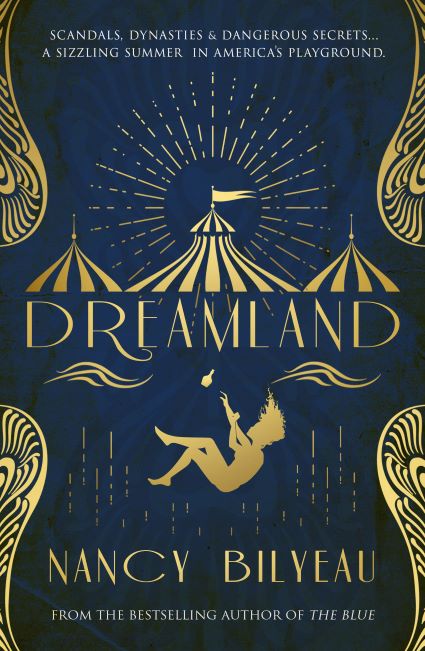
Cover Reveal: Dreamland by Nancy Bilyeau

Dreamland by Nancy Bilyeau
Tuesday, May 7, 2019
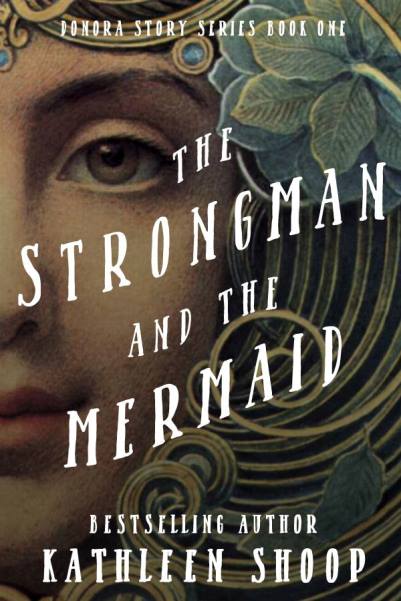
Blog Tour Guest Post: The Strongman and the Mermaid by Kathleen Shoop
Myscowa, Poland—1910
Once upon a time in tiny, rural Myscowa, Lukasz Musial competes in feats of strength against his lifelong nemesis to win passage to America. He leaves behind grinding poverty and despair, to seek the clear blue skies, and better life he sees on a postcard. Settled in Donora’s Polish community, Lukasz secures a coveted job in the wire mill, and is matched to marry Donora’s very own Polish princess. Life is set on course. The American Dream is nearly his.
Donora, Pennsylvania—1910
Mary Lancos is no princess. A tall, athletic girl who loves the water, she spends her days keeping house for families in town, digging coal out of a backyard seam and rowing her father across the Monongahela River for work. Mary is dependable, tenacious, and always ready to help when someone needs her. She dreams of a gas-heated home, a bedroom for each of her future children, and good meals on the table each night. To help make that happen Mary attends local dances, waiting for the few men who are taller than her to ask her to dance, hoping one of them is right for her.
An unexpected Christmas Eve visitor brings bad luck, and Lukasz’s world crumbles. Meanwhile, tension grows at the Lancos home when money is short and Mary’s dreams clash with her parents’ old world expectations. Just when Mary and Lukasz are at their lowest, they find themselves under an odd pink moonlit sky and Lukasz rescues Mary from a fall into frigid river water. The attraction between them is sudden and consuming, turning the pair onto an unexpected path. With mounting disapproval from Mary’s parents, and increased pressure on Lukasz, they must decide if love is enough to risk losing everything else that matters.
Available on Amazon
When writing fiction, an author’s goal is to draw readers into a literary world as real as the street they walk down every day. Doing this requires layers of work. Plots must be crafted to unfold in natural ways, and characters must be unique and experience a transformational arc. Often in historical fiction, setting acts like a character—shaping, influencing, transforming all who tread through it.
In The Donora Story Collection, the famous steel town of Donora, Pennsylvania, is the thread that ties the novels together from 1910 to 1948. Community, holiday traditions, religious expectations, neighborly behavior, and most importantly, the steel and finishing mills that gave birth to the town, drive much of the action. The elements combine to lend each character’s arc the weight it needs to be wholly new and compelling in order to satisfy voracious, passionate, and intelligent readers.
When William Donner and Andrew Mellon decided to develop their mills on a horseshoe bend of the Monongahela River, the town of Donora (a combination of Donner’s name and Nora Mellon, Andrew’s young wife) was born. Labor was in such great demand and housing was so short that people put homes up anywhere they could find a space, fitting them into valley walls and overstuffed flats.
This speedy development meant that wealthier American management folks lived side-by-side with unskilled immigrant labor from Spain, Poland, Croatia, Germany, Austria, Hungary, Italy, and what is now the Czech Republic. This fabulous circumstance lends richness and opportunity for plot development and character growth.
Tuesday, April 9, 2019
Blog Tour Review: When We Left Cuba by Chanel Cleeton
From the Back Cover:In 1960s Florida, a young Cuban exile will risk her life--and heart--to take back her country in this exhilarating historical novel from the author of Next Year in Havana, a Reese Witherspoon Book Club pick.
Beautiful. Daring. Deadly.
The Cuban Revolution took everything from sugar heiress Beatriz Perez--her family, her people, her country. Recruited by the CIA to infiltrate Fidel Castro's inner circle and pulled into the dangerous world of espionage, Beatriz is consumed by her quest for revenge and her desire to reclaim the life she lost.
As the Cold War swells like a hurricane over the shores of the Florida Strait, Beatriz is caught between the clash of Cuban American politics and the perils of a forbidden affair with a powerful man driven by ambitions of his own. When the ever-changing tides of history threaten everything she has fought for, she must make a choice between her past and future--but the wrong move could cost Beatriz everything--not just the island she loves, but also the man who has stolen her heart...
While Elisa's story took place in Cuba during the revolution and Marisol's in the present day, Beatriz's story takes place among the Cuban exiles living in south Florida in the years after the revolution and sheds light on the situation many refugees found themselves in, having to watch tyranny take over their beloved island from afar, worried about loved ones they left behind, struggling to adjust to their new reality in a new country.
As a famous socialite in Cuba and a scandalous one in America, beautiful, intelligent, and sensuous, with ties to both the revolutionaries and the resistance, Beatriz Perez is quick to catch the attention of not only every bachelor in Palm Beach, but also the CIA. Beneath the carefree facade she presents in public, Beatriz is angry. Very angry. And her anger needs an outlet. Lured with the promise of helping bring down Fidel Castro, Beatriz becomes a spy.
But there are complications. Beatriz falls in love for the first time, with a powerful man, and their relationship could present a threat to her ambitions and the nation's security. She constantly feels the disapproval of her parents and their pressure to preserve their good name by behaving herself and catching a good husband. Resistance fighters and radicals have infiltrated Palm Beach society. Russia's new alliance with Cuba brings America to the brink of nuclear war. And Beatriz grapples with her conscience and her heart's desires and must ultimately decide where her allegiance lies and how far she is willing to go to prove it.
The story begins with a prologue featuring Beatriz as an older woman in 2016 that leaves you wondering which of the many men in her life is sending her champagne on the day Fidel Castro dies. Interspersed with Beatriz's adventures are a few more scenes from 2016 that ratchet up the anticipation of discovering how the past storyline plays out, and this book consumed me so much it seriously gave me anxiety. Whenever I had to put it down to go back to real life, I thought about it constantly till I could get back to it. I devoured it.
Wednesday, February 20, 2019
Blog Tour Guest Post: Innocence Lost by Sherilyn Decter
In a city of bootleggers and crime, one woman must rely on a long-dead lawman to hunt down justice…
Philadelphia, 1924. Maggie Barnes doesn’t have much left. After the death of her husband, she finds herself all alone to care for her young son and look after their rundown house. As if that weren’t bad enough, Prohibition has turned her neighborhood into a bootlegger’s playground. To keep the shoddy roof over their heads, she has no choice but to take on boarders with questionable ties…
When her son’s friend disappears, Maggie suspects the worst. And local politicians and police don’t seem to have any interest in an investigation. With a child’s life on the line, Maggie takes the case and risks angering the enemy living right under her nose…
Maggie’s one advantage may be her new found friend: the ghost of a Victorian-era cop. With his help, can she find justice in a lawless city?
Innocence Lost is the first novel in the Bootleggers’ Chronicles, a series of historical fiction tales. If you like headstrong heroines, Prohibition-era criminal underworlds, and just a touch of the paranormal, then you’ll love Sherilyn Decter’s gripping tale.
In every author of historical fiction lies the beating heart of a passionate researcher. It’s one of my favorite parts of writing. While I include real people, real events, and real settings into the Bootleggers’ Chronicles series, they are fictionalized to help drive the story further.
There are numerous books, articles, and online resources available for researchers looking to learn more about the 1920s in America. It was a tumultuous time. The destruction and brutality of World War One and the entrepreneurial opportunities created through Prohibition set the stage for significant change.
I try to have the characters in my novels be ‘of their time.’ Often I have to wrestle with timing--a great event won’t fit neatly into the timeline of the plot. There is the recurring question of how to incorporate authentic attitudes toward people who are different, toward women, that sometimes grate on our modern ear. And don’t get me started on the different standards of personal hygiene!
Maggie Barnes, the main character of Innocence Lost, is a woman of her time. She’s mistrustful of the immigrants that have poured into Philadelphia because of the Great War, families from other countries that are there because of the economic opportunities or fear of what’s happening back in their home countries. She struggles as she learns to share her city and her neighborhood with these strangers.
I found the sections where Maggie battles often and loudly with her mother--a woman born in a different century--about hair length, skirt length, women’s independence, and language amusing to write. Ah, the ‘younger generation’ is always with us.
Keeping Innocence Lost as authentic as possible, I had great fun poking my nose into how people lived in the 1920s. It’s the beginning of the modern era, so familiar to us from stories told around our own dinner tables by older family members, and yet a hundred years ago. What would Maggie’s laundry day look like? How and where would she buy groceries? What did flappers wear under all that fringe?
Wednesday, January 9, 2019
Blog Tour Q&A with Jess Montgomery, Author of The Widows
Kinship, Ohio, 1924: When Lily Ross learns that her husband, Daniel Ross, the town’s widely respected sheriff, is killed while transporting a prisoner, she is devastated and vows to avenge his death.
Hours after his funeral, a stranger appears at her door. Marvena Whitcomb, a coal miner’s widow, is unaware that Daniel has died, and begs to speak with him about her missing daughter.
From miles away but worlds apart, Lily and Marvena’s lives collide as they realize that Daniel was not the man that either of them believed him to be–and that his murder is far more complex than either of them could have imagined.
Inspired by the true story of Ohio’s first female sheriff, this is a powerful debut about two women’s search for justice as they take on the corruption at the heart of their community.
Amazon | Books-A-Million | Barnes & Noble
Hi Jess! Thanks so much for visiting Let Them Read Books!Your characters are based on Maude Collins, Ohio's first female sheriff, and Mary "Mother" Jones, a famous community organizer. How did you first discover these women and what was it about them that inspired you to write The Widows?
Our younger daughter went to Ohio University in Athens County. I was researching places to visit with her in the area for her birthday and ran across the tourism website for Vinton County, which abuts Athens County to the southwest. Maude Collins was featured on the county’s tourism website, with a few photos and a brief bio of Maude, who was appointed to fill her husband’s role as sheriff when he was killed in the line of duty in 1925, thus becoming Ohio’s true first female sheriff. Maude went on to be elected as the county’s sheriff in her own right in 1926—in a landslide!
I was immediately inspired by the quiet strength and strong character that I sensed in Maude from both her bio and her photos. As I began writing a novel inspired by her role as sheriff in the 1920s, I realized that my character, Lily Ross, needed another character who would serve as both a foil and an ally. I knew that Lily knew only aspects of her husband Daniel, and I wanted her to discover a more complete understanding of his life—ironically, after his death, while investigating his murder. A rather minor character slowly emerged to fulfill that role—Marvena Whitcomb, who was a childhood friend of Daniel’s. She grew to become Lily’s connection to the coal mining community of the region. I already knew about Mother Jones in general, and then I read about her role in the true-life Battle for Blair Mountain (essentially warning of the dangers of an uprising—and she turned out to be right), which took place in West Virginia in 1921 as coal miners rebelled against the poor wages and unsafe work conditions set by their coal company bosses.
Lily and Marvena would be well aware of this battle and end up wanting to prevent a similar battle from taking place in their region. So I realized I could have the strong spirit of Mother Jones become a part of Marvena’s character.
What led you to creating fictional characters based on these pioneering women rather than writing biographical fiction about them?
One reason is that I am a novelist, not a nonfiction writer. Much has already been written about Mother Jones’s life and work.
In Maude’s case, the circumstances of her sheriff husband’s death—he was killed in the line of duty—are certainly tragic, but not at all mysterious. There was no doubt about who killed him. My novelist mind started wondering, though, what if the sheriff was killed, but no one knows by whom or why? What if the explanations given to his widow are sketchy and unsatisfactory? What if she started asking questions? What if she was appointed sheriff and decided to use the access that gave her to help uncover the truth of his death? And so from there, Lily Ross was born as a character inspired by Maude Collins.
Monday, June 25, 2018
Guest Post: The Genesis of Artist, Soldier, Lover, Muse by Arthur Hittner
Freshly graduated from Yale, Henry J. Kapler parlays his talent, determination, and creative energy into a burgeoning art career under the wing of painters such as Edward Hopper and Reginald Marsh. The young artist first gains notoriety when his painting of a symbolic handshake between a young, African-American baseball player and his Southern white rival is attacked by a knife-wielding assailant while on display at the Corcoran Gallery in Washington. Yet even as his art star rises, Henry’s personal life turns precarious—and perilous—when his love for Fiona, a young WPA muralist, collides with his growing attraction to the exquisitely beautiful Alice, an ex-chorus girl who becomes his model and muse. Alice is the girlfriend of Fiona’s cousin, Jake Powell, the hotheaded, hard-drinking outfielder for the New York Yankees whose jealousy explodes into abuse and rage, endangering the lives of all three. While Henry wrestles with his hopelessly complicated love life, he also struggles mightily to reconcile his pacifism with the rabid patriotism of his Jewish-Russian émigré father. As war draws near, Henry faces two difficult choices, one of which could cost him his life.
Years later, I self-published a brief biography and catalogue raisonne, At the Threshold of Brilliance: The Brief But Splendid Career of Harold J. Rabinovitz (The Rabinovitz Project, 2014; rev. ed., 2017). I’d traced the living descendants of the artist, determining that the bulk of his output resided in the attics and basements of his nephews and nieces, and in the vaults of an art museum in Springfield, Massachusetts. I viewed and photographed the collections of the descendants and the paintings in the museum. Many were brilliant works, very much the product of the times in which he painted: a blind beggar in a subway car, his hand turned upward in supplication; a jobless man on a curb, his face etched with dejection and hopelessness; an old woman, clad in rags, selling pretzels outside a subway station. Along with the paintings, I’d gained access to an old scrapbook that had been lovingly maintained by the artist’s parents. Inside were yellowed newspaper clippings from the Thirties and early Forties, chronicling the young artist’s triumphs and sorrows.
Not surprisingly, no market exists for a biography of a long-forgotten artist, however talented. Except for the Frick Art Reference Library and the Yale University Library (where Rabinovitz obtained his degree), I could count the proud possessors of the fruits of my labor on two hands.
But no matter. I wrote that book out of a compulsion to discover the story behind my painting. Yet I learned much more: I’d become immersed in another time and place—the New York City art world of the late Thirties, a metropolis teeming with struggling artists, many surviving on meager paychecks from government-sponsored artist support programs. At some point I had an epiphany. I realized that I could share this world with a wider swath of readers by turning to historical fiction.
Inspired by the life I’d just documented, I created my own young artist, Henry J. Kapler, placing him in the heart of the world I’d uncovered in my research. Buoyed by further research and honed by an endless succession of drafts, Artist, Soldier, Lover, Muse (Apple Ridge Fine Arts Press, December, 2017) was ready for publication.
Henry J. Kapler is not Harold Rabinovitz, although their lives share a number of salient facts, a common timeline, and even some of the same artworks. Henry is a figment of my imagination, as are his thoughts, desires, motivations, quirks, and foibles. Beyond this, I sought to portray the world in which Henry resides, the New York art world of the late Depression, including the artists, athletes, politicians, events, and institutions that contributed to the rich history of the period, with as much historical accuracy as possible.
In tackling historical fiction, one often uncovers little known characters and facts that prove the adage of Mark Twain that truth is stranger than fiction. In seeking a villain, an author could have done no better than New York Yankee outfielder Jake Powell, whose on-field belligerence was the perfect resume for his violent encounters with Alice and Fiona, the two women in Henry’s life, and whose ill-fated radio interview in 1939 and the events that followed are little-known footnotes in the shameful history of segregation in professional sport. Similarly, the saga of “Bunny” Taliaferro, the gifted African-American athlete from Henry’s hometown of Springfield, Massachusetts and target of a 1934 racial incident in Gastonia, North Carolina, seemed a natural inspiration for Henry’s imaginary masterpiece, Gastonia Renaissance.
Scores of artworks make at least a cameo appearance in Artist, Soldier, Lover, Muse. Paintings by artists other than Henry Kapler are works that might have been seen by a young artist in New York City at the time. Some are monumental murals that still adorn important buildings in New York. The paintings attributed to Henry are about evenly divided between purely fictional creations and works painted by Harold Rabinovitz, although the inspiration behind all of Henry’s paintings, as well as the details of their creation, derive solely from my own imagination.
Tuesday, June 5, 2018
Review: Side by Side by Jenni L. Walsh
From the Back Cover:Texas: 1931. It’s the height of the Great Depression, and Bonnie is miles from Clyde. He’s locked up, and she’s left waiting, their dreams of a life together dwindling every day.
When Clyde returns from prison damaged and distant, unable to keep a job, and dogged by the cops, Bonnie knows the law will soon come for him. But there’s only one road forward for her.
If the world won't give them their American Dream, they'll just have to take it.
My Thoughts:
I was late to the Becoming Bonnie party, but after receiving a review copy of Side by Side, I knew I had to read Bonnie's story first, and I'm so glad I did. That book brought me out of a month-long reading slump. Bonnie is a character I really wanted to root for, and it was hard to watch her make decisions that I knew would lead to heartache—and worse. In that book, Bonnie and Clyde didn't get together till near the end, and the anticipation of them finally getting together had me burning through the pages.
In Side by Side, there's anticipation of a different sort 'cause everyone knows what happened to Bonnie and Clyde. Even if you know nothing else about their story, you know how it ends.
I have such conflicting feelings about Bonnie and Clyde. Walsh does an admirable job of portraying them as two people who got caught up in a life of crime. In her hands, they are both easy to like.
"I do know a little something 'bout having dreams. I also know something 'bout them crumbling 'round me, clunking me on the head and leaving me with a black eye." ~Bonnie Parker
They justify their actions by their life experiences. Bonnie lost her savings when the banks crashed in '29. Clyde was brutalized by the police in prison and hounded by them whenever he was out, so banks and cops feel like justifiable targets. Throughout their years on the run, living out of one stolen car after another, living off whatever they can steal, sometimes hooking up with others and sometimes on their own—and always trying to stay a step ahead of the law—they never let go of their dream, to live an honest life on a little farm. The problem is that in order to get that honest life, they have to do a whole lot of bad things. Bonnie's in denial, her heart so attached to the dream of a farm, a dream she thinks still has a shot at coming true, right up to the very end, that my heart broke for her.
But on the other hand, they're criminals. In a time when people have so little, they steal people's hard-earned money, not just from banks but from mom-and-pop stores and gas stations, they steal family cars, and they kill people, men who had families depending on them. I think it's also a bit of a cautionary tale. This is what happens when someone wants so badly to be loved, as Bonnie does, wants so desperately to have a partner, places such blind faith in that person, that they are able to rationalize what that person does. In Walsh's novelization, there's no doubt that Clyde loves Bonnie. But not enough to leave his life of crime behind, though the promise of doing so is always dangling just beyond their reach.
And yet I still cried at the end.
You definitely have to read Becoming Bonnie before you dive into Side by Side to get the full experience and understand how Bonnie and Clyde came to be. And if you're a fan of atmospheric historical fiction with a whole lot of action and a little bit of romance, you'll be burning through the pages just like I was.
My Rating: 4 Stars out of 5
Tuesday, May 1, 2018
Blog Tour Guest Post: Ain't Misbehavin' by Jennifer Lamont Leo
In Jazz Age Chicago, Dot Rodgers sells hats at Marshall Field while struggling to get her singing career off the ground. Independent and feisty, she’s the life of the party. But underneath the glitter, she doesn’t believe she’s worth the love of a good man. Why would a strong, upstanding man want to build a future with a shallow, good-time girl like her?
Small-town businessman Charlie Corrigan carries scars from the Great War. After all he’s been through, he wants nothing more than to marry and start a family. But the woman he loves is a flamboyant flapper with no intention of settling down. She’s used to a more glamorous life than he can offer. As his fortunes climb with the stock market, it seems he’s finally going to win her love. But what happens when it all comes crashing down?
When it comes to source materials, we authors who set our stories after, say, 1910 have an advantage over those writing about earlier eras, in that we have so many different types of media available to us. We can access not only books and newspapers, but also radio, movies (both silent and “talkies”), and voice and music recordings. Thanks to the magic of the Internet, we can listen to the songs, learn the dance steps, and study the lingo and voice inflections. Scattering these details throughout our stories helps paint a richer picture of the time period.
The early twentieth century also saw an explosion of advertising in popular magazines like Woman’s Home Companion and Ladies’ Home Journal. Consumer ads tell us a surprising amount of information about people’s everyday lives and concerns (“What will the neighbors think?” was—and continues to be—a big one) as well as a wealth of detail about clothing, hairstyles, color schemes, prices, home décor, automobiles, and recipes.
The downside to this cascade of information is that those of us addicted to research risk following every fascinating breadcrumb and rabbit trail, losing hours and even whole days in pursuit of some arcane fact. At some point we need to stop the research and start writing the darn story!
Tuesday, April 10, 2018
Spotlight: Courage Between Love and Death by Joseph Pillitteri
Courage Between Love and Death by Joseph Pillitteri
Publication Date: March 29, 2018
When the unthinkable happens, it is a turning point, not only for the medical industry and our country’s security, but also for Elspeth personally. With her career and reputation on the line, will she have the courage to overcome the challenges she faces to clear her name and continue to be there for the ones she loves?
Amazon | Barnes and Noble | IndieBound
Praise for Courage Between Love and Death
“…Joseph Pillitteri’s writing is flawless and delightful. The tension builds up very fast and doesn’t slow down until the satisfying conclusion. Courage Between Love and Death is focused, deft, and balanced, and the reader will follow the protagonist through her emotional and psychological turmoil until the very last page. A gripping story with great historical references, it’s an edge of the seat read. Courage Between Love and Death by Joseph Pillitteri is a historical novel that is well-researched and written to great satisfaction.” —Christian Sia, Readers’ Favorite
“Courage Between Love and Death is a well-researched and masterfully crafted historical novel with strong characters and a mesmerizing plot. Apart from developing a very strong conflict, Joseph Pillitteri does a brilliant job in weaving powerful dialogues and intrigue into the story. The reader is transported into an atmospheric world with medical personnel, strong personalities, and a historic event that will remain engraved in the minds of many. There is so much to enjoy in this novel — the drama, the emotional and psychological intensity of the story, the excellent prose and the compelling characters. I was sucked into the narrative from the very first page.” —Romuald Dzemo, Readers’ Favorite
About the Author
While working at Roswell Park Memorial Hospital in Buffalo, NY, Joseph Pillitteri became intrigued by the role Dr. Park played in the surgery of President McKinley at the 1901 Pan American Exposition. It was a pleasure to shape facts and fiction together to tell the story. Previous works by Pillitteri include When the Giraffe Runs Down (Dial Press), Two Hours on Sunday (Dial Press), The Abortion (Penguin Books), and Life Pulse (Penguin Books).
Thursday, February 1, 2018
Blog Tour Guest Post: The Secret Life of Mrs. London by Rebecca Rosenberg
San Francisco, 1915. As America teeters on the brink of world war, Charmian and her husband, famed novelist Jack London, wrestle with genius and desire, politics and marital competitiveness. Charmian longs to be viewed as an equal partner who put her own career on hold to support her husband, but Jack doesn’t see it that way…until Charmian is pulled from the audience during a magic show by escape artist Harry Houdini, a man enmeshed in his own complicated marriage. Suddenly, charmed by the attention Houdini pays her and entranced by his sexual magnetism, Charmian’s eyes open to a world of possibilities that could be her escape.
As Charmian grapples with her urge to explore the forbidden, Jack’s increasingly reckless behavior threatens her dedication. Now torn between two of history’s most mysterious and charismatic figures, she must find the courage to forge her own path, even as she fears the loss of everything she holds dear.
“Charming Houdini, I shall never forget him…” Charmian London’s diary, 1916.
How do two of the most iconic men in America in the early 1900s, Houdini and Jack London, fall in love with the same woman, Charmian Kittredge London?
![]() |
| Harry Houdini and Jack London |
And Jack London was the most popular, well-paid author in America, writing fifty books in twenty years. Adventure novels such as Call of the Wild and White Fang, to scathing political novels such as People of the Abyss and Iron Heel, to socialist statement novels The Valley of the Moon and Martin Eden.
![]() |
| Jack and Charmian working together |
She was college educated and worked as a writer, editor, and typist when she met budding novelist Jack London. She read and reviewed his first novel, and their partnership was born. Jack would tell his stories, and Charmian would type them up at 100 words per minute, later editing for him. Their equal working relationship was extraordinarily productive, producing 1000 words a day. Their marriage was a modern model of equality, so much so, they called each other “Mate” instead of darling or sweetheart.
Wednesday, January 10, 2018
Guest Post: The Circumstantial Enemy by John R. Bell
When Croatia becomes a Nazi puppet state in 1941, carefree pilot Tony Babic finds himself forcibly aligned with Hitler’s Luftwaffe. Unbeknownst to Tony, his sweetheart Katarina and best friend Goran have taken the side of the opposing communist partisans. The threesome are soon to discover that love and friendship will not circumvent this war’s ideals. Downed by the Allies in the Adriatic Sea, Tony survives a harrowing convalescence before being shipped to a prisoner of war camp in America. But with the demise of the Third Reich, he considers the kind of life that awaits him in the homeland under communist rule. Will he be persecuted as an enemy of the state for taking the side of Hitler? And then there is Katarina; in letters she confesses her love, but not her deceit… Does her heart still belong to him?
The Circumstantial Enemy is an energetic journey to freedom through minefields of hatred, betrayal, lust and revenge. Rich in incident with interludes of rollicking humor, it’s a story about the strength of the human spirit, and the power of friendship, love and forgiveness.
The Circumstantial Enemy was released in October 2017. There is a twist to the title; the novel happened to be written by a circumstantial author. Why do I categorize myself that way? For starters, I’d never felt a burning desire to write a book. That all changed with one potent statement from my daughter. Seventeen years ago she said, “If you don’t write it, Grandad’s story will be lost forever.” I’ll never forget the yearning in her eyes. Though in good health, Grandad was 80 years old at the time and he wasn’t about to be the first human being to live forever. The family had heard his tales over and over again – trials and tribulations of a young Croatian pilot coerced onto the wrong side of WWII.
My daughter made it clear that she wasn’t requesting a book; a record of the events stapled together would suffice. I reasoned that I was not a writer; that defense was feeble, partly because I had the time to write. My career as a CEO of a large company had ended, and I had embarked on consulting work that required a heap of travel and plenty of lonely nights in hotels. I also had to admit that preserving Grandad’s captivating story for his descendants was incredibly compelling. So began my journey as an author.
Thrilled by the opportunity, Grandad agreed to a host of interviews. I was no longer a passive listener. Rather, I treated our exchange as might a journalist – probing for details and questioning events that seemed overstated. The most interesting revelation was his frankness. He soon forgot the recorder was on, revealing more than ever before – some of it both shocking and disturbing. Between the sessions, I checked his facts to ensure the timelines were correct and life in POW camps on US soil were as he described. Simultaneously, I was reading relevant nonfiction books to better understand time, place, and prisoner predicament.
When I began writing, I found myself thinking as might a novelist – the notion that fiction hinges on the characters and what they want. Grandad’s motivation was freedom from repression. A year later, I had completed his biography. With enough copies printed for the family and a few generations to come, I thought I was done as an author. Not so. I’d been infected by that burning desire to write.