Sunday, March 14, 2021
Blog Tour Guest Post: The Steel Beneath the Silk by Patricia Bracewell
Wednesday, September 16, 2020
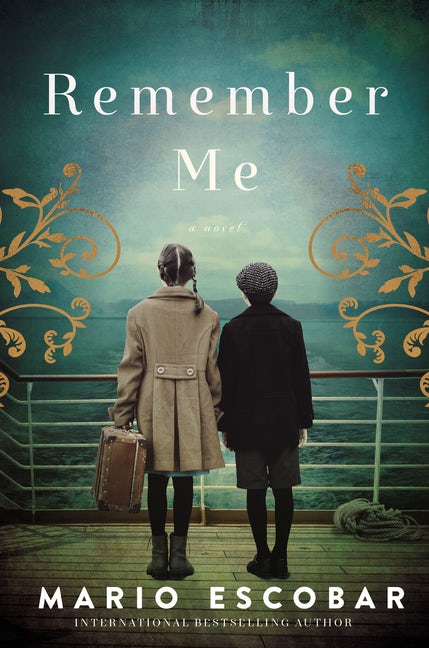
Blog Tour Spotlight: Remember Me by Mario Escobar

Remember Me: A Spanish Civil War Novel by Mario Escobar
Amazon | Barnes and Noble | IndieBound
About the Author
Website | Facebook | Twitter | Goodreads
Blog Tour Schedule
Monday, September 14, 2020
Blog Tour Q&A with Mitchell James Kaplan, Author of Into the Unbounded Night
What inspired you to write Into the Unbounded Night?
I wasn’t particularly thinking about writing a novel set in the first century. Nor did I decide to do so prior to undertaking the research. I simply became fascinated with the period. The characters emerged from the world I was exploring.
What kind of sources did you use as you were researching the time period?
Any and all sources. Of course, I read lots of books. I went to Roman sites in the UK, Italy, Israel, and Turkey. Questions arise in your mind, and then questions beget other questions. Why did the Romans feel it was necessary to destroy the Temple of Jerusalem? What were the underlying differences (cultural, ideological, political)? Why did Christianity and Rabbinic Judaism diverge in the first century? etc. It’s like you’re trying to fit together the pieces of a puzzle.
Did you learn anything in your research that surprised you?
Everything I learned surprised me. I hope I managed to convey some of that wonderment in INTO THE UNBOUNDED NIGHT.
What were the most rewarding and challenging aspects of writing this story?
The most rewarding thing, for me, is learning from my characters. I find their stories so fascinating, enriching, and moving.
What I find most challenging, when writing any novel, is to get outside of it, back into the so-called real world, where I try to spend as little time as possible. (But honestly, I don't think it's more real than the so-called fictional worlds.)
What do you hope readers take away from the story?
That we can learn a lot from these people: how they perceived the universe; what mattered to them; what mistakes they made; and maybe, what mistakes we’re making.
Tuesday, August 18, 2020
Blog Tour Guest Post by Rachel McMillan, Author of The London Restoration
Please join me in welcoming Rachel McMillan to Let Them Read Books! Rachel is touring the blogosphere with her newest novel, The London Restoration, and I'm thrilled to have her here today with a guest post about endings and beginnings and cinematic themes in her storytelling. Read on and enter to win a paperback copy of The London Restoration!
From author Rachel McMillan comes a richly researched historical romance that takes place in post-World War II London and features a strong female lead.
Determined to save their marriage and the city they love, two people divided by World War II’s secrets rebuild their lives, their love, and their world.
London, Fall 1945. Architectural historian Diana Somerville’s experience as a codebreaker at Bletchley Park and her knowledge of London’s churches intersect in MI6’s pursuit of a Russian agent named Eternity. Diana wants nothing more than to begin again with her husband Brent after their separation during the war, but her signing of the Official Secrets Act keeps him at a distance.
Brent Somerville, professor of theology at King’s College, hopes aiding his wife with her church consultations will help him better understand why she disappeared when he needed her most. But he must find a way to reconcile his traumatic experiences as a stretcher bearer on the European front with her obvious lies about her wartime activities and whereabouts.
Featuring a timeless love story bolstered by flashbacks and the excavation of a priceless Roman artifact, The London Restoration is a richly atmospheric look at post-war London as two people changed by war rebuild amidst the city’s reconstruction.
AMAZON | BARNES AND NOBLE | INDIEBOUND
If my book were one of the movies I love, the credits would roll and the reel would end just as my action is beginning.
For in movies set in war time, the end is always the reunion between the lovers. A violin score swells and the lighting design frames the embracing couple in sepia. Somewhere a bird flies and the clouds part and the old war song "We’ll Meet Again" is made manifest. The heroine is kissed brilliantly senseless by a uniformed soldier whose ardor inspires her left heel to raise off the ground.
Fade to black. The theme overtakes the violin swell and I swallow the last of my wine and bunch the tissue holding the last of my sniffles and snobs. Love wins. Love reunites.
Saturday, July 11, 2020
Spotlight: A Song for Lonely Wolves by Lee Evie
A Song for Lonely Wolves by Lee Evie
A missing woman. A frozen body.
A bonded servant girl, determined to solve a mystery.
Joseon Korea, winter, 1590.
At the foot of a jagged mountain range, an isolated village lies in muddy snow. From her bed, a young noblewoman vanishes in the dead of night and rumours of a fearsome ghost with no face echo in her wake.
Hard-working and dogged Dan Ji, arrives in the long winding valley with her own ghosts. As a damo, a tea servant of the police force, she is overlooked and undervalued. Yet this case has gripped her heart, and she craves to prove her worth beyond simply cooking and cleaning for her superiors – she is determined to solve the mystery.
With only the officer in charge on her side – a hard young man with a bloody past and secrets of his own – Dan Ji must convince the local Magistrate and his provincial policemen to trust her judgement. Yet with mistrust brewing, the investigation slowly grinds to a halt. Until a frozen body is unearthed from the deep snows of the mountain range.
It is not within Dan Ji’s nature to leave a mystery unsolved, yet soon she discovers the fine threads of this investigation run much deeper than anyone has anticipated.
A dark historical mystery set in old Korea.
Amazon | Barnes and Noble | IndieBound
About the Author

Website | Newsletter | Instagram | Goodreads
Tuesday, June 23, 2020
Blog Tour Q&A with Tea Cooper, Author of The Woman in the Green Dress
A cursed opal, a gnarled family tree, and a sinister woman in a green dress emerge in the aftermath of World War I.
After a whirlwind romance, London teashop waitress Fleur Richards can’t wait for her new husband, Hugh, to return from the Great War. But when word of his death arrives on Armistice Day, Fleur learns he has left her a sizable family fortune. Refusing to accept the inheritance, she heads to his beloved home country of Australia in search of the relatives who deserve it more.
In spite of her reluctance, she soon finds herself the sole owner of a remote farm and a dilapidated curio shop full of long-forgotten artifacts, remarkable preserved creatures, and a mystery that began more than sixty-five years ago. With the help of Kip, a repatriated soldier dealing with the sobering aftereffects of war, Fleur finds herself unable to resist pulling on the threads of the past. What she finds is a shocking story surrounding an opal and a woman in a green dress. . . a story that, nevertheless, offers hope and healing for the future.
This romantic mystery from award-winning Australian novelist Tea Cooper will keep readers guessing until the astonishing conclusion.
AMAZON | BARNES AND NOBLE | INDIEBOUND | KOBO
Hi Tea! Thank you so much for visiting Let Them Read Books!
Thank you so much for the invitation. It’s great to be here!
What inspired you to write The Woman in the Green Dress?
Without a doubt a book that was given to me by the local historian: A translation of Baron Charles von Hügel’s New Holland Journal, written during his visit to Australia from Austria between November 1833—October 1834. One section of it is devoted entirely to the Hunter Valley, the area where I live and set my stories. It was amazing to read his observations at the time. A line in the introduction of von Hügel’s journal sparked The Woman in the Green Dress. It said von Hügel’s journal had been transcribed by an amanuensis, a ghost writer. In a flight of fancy I dreamt up this character, Stefan von Richter, and the story began.
Did you get to go anywhere fun in the course of your research?
All of my books are set in the Hunter Valley of NSW, in Australia, an area bound by the Hunter, Hawkesbury and MacDonald rivers, and I spent a lot of time wandering the paths von Hügel took. Some you can drive today; others required a lot of hiking. I took several boat trips rediscovering the Hawkesbury River and the small riverside villages mentioned in the story and camped at Mogo Creek, where Della’s story begins. And of course I wandered the streets of Sydney. Many of the original buildings are still standing, but sadly Tost & Rohu’s shop on which I based The Curio Shop of Wonders is no more.
Did you learn anything in your research that surprised you?
I’ve been fascinated for some time by the prominent part women played in Sydney business in the nineteenth century. Jane Catharine Tost and, her daughter, Ada Jane Rohu, are two such women. They owned the taxidermy shop Tost & Rohu at 605 George Street, Sydney. Their customers included museums and scientific collectors as well as middle-class householders shopping for interior decor and fashion items. They won many awards for their work at International Exhibitions in London, Paris and New York. Known as ‘the queerest shop in Australia’, their business supplied the Australian Museum with many important specimens and boasted ‘the largest collection of genuine Native Implements’.
Monday, May 4, 2020
Blog Tour Guest Post by Eric Schumacher, Author of Forged by Iron
From the bestselling author of Hakon’s Saga comes Forged by Iron, the first in a series of thrilling tales about Olaf Tryggvason, one of the most legendary and enigmatic kings of the Viking Age.
Norway, AD 960. The fabric that has held the Northern realm together is tearing. The sons of Erik Bloodaxe have returned and are systematically killing all opposition to the High Seat. Through treachery, Harald Eriksson slays Jarl Trygvi, an heir to the throne, and then he comes for Trygvi’s wife, Astrid, and son, Olaf.
Astrid and Olaf flee their home with the help of Astrid’s foster father, Torolv Loose-beard, and his son, Torgil, who are oath-sworn to protect them. The group escapes east, through the dark, forested land of the Swedes and across the treacherous East Sea, all the while evading the clutches of Harald’s brutal henchmen.
But the gods are fickle and the group is torn apart, leaving them to fend for themselves in Forged by Iron, a must-read for all who enjoy action-packed historical fiction.
AVAILABLE ON AMAZON
So where did Olaf Tryggvason come from and what set him on his life’s path? That’s what I’ll explore in this post.
The Lineage of Olaf Tryggvason
If you take Snorre Sturlasson’s Heimskinrgla at face value, then Olaf Tryggvason is the son of Trygvi Olafsson, who is the ruler of a district in Viking Age Norway called Vingulmark. It is an area he had been granted to rule by his uncle, Hakon Haraldsson (or Hakon the Good), the youngest son of the infamous King Harald Fairhair. Trygvi Olafsson is in turn the son of Olaf Haraldsson, the older half-brother of Hakon who was killed by another half-brother, Erik Bloodaxe, the favorite of their mutual father Harald. Snorre makes this family tree clear in Heimskringla, presumably in an effort to legitimize Olaf Tryggvason’s claim to the High Seat of Norway, though we do not yet know if it is actually true, in part because Heimskringla was written ~250 years after Olaf Tryggvason lived.
There are other, earlier, mentions of Olaf, such as the poems of Hallfreðr Óttarsson the Troublesome, a contemporary skald who served in Olaf’s court, and Adam of Bremen’s Gesta Hammaburgensis Ecclesiae Pontificum ("Deeds of the Bishops of Hamburg"), written ~70 years after Olaf’s death, neither of which dive into the details of Olaf’s lineage.
Still, even if you take Heimskringla to be moderately true, that is, to think of Olaf maybe not as a direct descendent of Harald Fairhair, but more as the son of a nobleman in Vingulmark, then you have to think of Olaf as at least noble, and maybe someone with designs for something greater.
Wednesday, April 29, 2020
Blog Tour Spotight: The Ruin of Evangeline Jones by Julia Bennett
The Ruin of Evangeline Jones
by Julia Bennet
Publication Date: April 27, 2020
Evie worked her way up from the gutter and she’s not about to abandon the life she’s built for fear of this aristocratic dilettante. She knows his type. She sees the attraction simmering beneath his animosity, and she knows how to use it to keep him off balance. They strike a bargain. He has one week to prove she’s a fake. If he fails, he has to abandon all further attempts. If he succeeds, she’ll not only retire but make a public statement explaining all her tricks.
Neither expects to find anything in common, not to mention anything to love, in the other. Both are blindsided by the affinity and blossoming tenderness between them. But even if it were possible for a lowly charlatan to live happily ever after with a duke, more is going on than either suspects. Someone else has brought them together for a sinister purpose of his own.
Available on Amazon
About the Author:

Website | Facebook | Twitter | Instagram | Goodreads
Monday, April 13, 2020
Blog Tour Excerpt: Duke Darcy's Castle by Syrie James
Kathryn Atherton has one goal: to become the first woman architect in Britain. Marriage doesn’t figure in her plans. Despite the odds, her schooling is behind her. Now she needs experience. When she’s sent to a small tidal island in Cornwall to remodel a castle, the last thing Kathryn wants is to be attracted to its roguishly handsome owner.
Kathryn is determined to keep things professional, but the sizzling attraction between her and the duke quickly blazes out of control. When Darcy learns that Kathryn is an heiress whose fortune would save St. Gabriel’s Mount, he wages the most important battle of his life: to woo and win the woman who’s captured his heart. But (in an homage to Austen), the Duke’s first proposal is so Darcyesque, he is refused. In any case, duchesses can’t be architects. And Kathryn has worked too long and too hard to give up her career for anyone ….
Excerpt:
Monday, March 16, 2020
Blog Tour Q&A with Catherine Meyrick, Author of The Bridled Tongue
Death and life are in the power of the tongue.
England 1586
Alyce Bradley has few choices when her father decides it is time she marry as many refuse to see her as other than the girl she once was–unruly, outspoken and close to her grandmother, a woman suspected of witchcraft.
Thomas Granville, an ambitious privateer, inspires fierce loyalty in those close to him and hatred in those he has crossed. Beyond a large dowry, he is seeking a virtuous and dutiful wife. Neither he nor Alyce expect more from marriage than mutual courtesy and respect.
As the King of Spain launches his great armada and England braces for invasion, Alyce must confront closer dangers from both her own and Thomas’s past, threats that could not only destroy her hopes of love and happiness but her life. And Thomas is powerless to help.
‘People never forget. When the fancy takes them, they bring the old stories out and embroider them further.’
Hi Catherine! Thank you for visiting Let Them Read Books!
What inspired you to write The Bridled Tongue?
The spark was my own experience as the subject of gossip, a very long time ago. What struck me was the way a minor incident or slip of the tongue can be twisted, embellished and shaped into something else altogether. And while gossip, for us, is uncomfortable, I started thinking of how dangerous it was in other times, particularly if that gossip resulted in an accusation of witchcraft where normal evidential rules were set aside and the most dubious hearsay evidence could be enough to bring a person to the gallows. As the story is one of women living in the sixteenth century, I wanted to look at the corrosive effect on women’s relationships when they are valued mainly for their ability to produce healthy children and the poisonousness of favouritism in families.
Were the characters of Alyce and Thomas based on real historical figures?
Thomas and Alyce are entirely fictional, but I have drawn on elements in the lives of a number of contemporary men and women. Margaret, Lady Hoby, the author of the earliest known diary written by a woman in English, particularly interested me, and it is her industrious life I have used as a model for Alyce’s at Ashthorpe. Margaret began writing her diary as a religious exercise, and while it includes details of her religious practices, prayer and reading, it also provides a glimpse of the busy domestic life of a woman managing a large household and estate, often in her husband’s absence. It also gives a strong sense of the breadth of skills possessed by women in these positions, from entertaining guests, sewing, preserving foods and making sweetmeats, to pulling hemp, weighing and dying wool and spinning, as well as distilling medicinal salves and tinctures and treating the household, labourers and tenants, keeping the household accounts and managing the wider farm.
Tuesday, March 3, 2020
Guest Post: Hannah's War by Jan Eliasberg
Berlin, 1938. Groundbreaking physicist Dr. Hannah Weiss is on the verge of the greatest discovery of the 20th century: splitting the atom. She understands that the energy released by her discovery can power entire cities or destroy them. Hannah believes the weapon's creation will secure an end to future wars, but as a Jewish woman living under the harsh rule of the Third Reich, her research is belittled, overlooked, and eventually stolen by her German colleagues. Faced with an impossible choice, Hannah must decide what she is willing to sacrifice in pursuit of science's greatest achievement.
New Mexico, 1945. Returning wounded and battered from the liberation of Paris, Major Jack Delaney arrives in the New Mexican desert with a mission: to catch a spy. Someone in the top-secret nuclear lab at Los Alamos has been leaking encoded equations to Hitler's scientists. Chief among Jack's suspects is the brilliant and mysterious Hannah Weiss, an exiled physicist lending her talent to J. Robert Oppenheimer's mission. All signs point to Hannah as the traitor, but over three days of interrogation that separate her lies from the truth, Jack will realize they have more in common than either one bargained for.
Hannah's War is a thrilling wartime story of loyalty, truth, and the unforeseeable fallout of a single choice.
I knew I had to tell her story. So began a ten-year quest that took me deeply into the history of the atomic bomb and the physics that propelled it. My mystery woman was Dr. Lise Meitner, an Austrian female scientist, a Jew, working at the highest levels of research at the Kaiser Wilhelm Institute in Berlin. I tore through her diaries and letters and discovered that she and her partner, Otto Hahn, were on the verge of splitting the atom when Austria was annexed. Meitner’s privileged position, and all the protections her colleagues had promised, evaporated within six terrifying hours as she fled Berlin within minutes of being captured and sent to the camps.
Otto Hahn, who remained in Berlin, was so dependent on Meitner that he continued to collaborate with her, even after she’d fled to Sweden. He sent her the results of their experiments on postcards via courier. It was Meitner, not Hahn, who analyzed the results and discovered that they had split the atom. Because she was Jewish, the papers published in Germany did not have her name on them; if they had borne her name, they would immediately have been discredited as “Jewish Physics.” It wasn’t surprising to find that rabid Anti-Semitism in Germany had prevented Meitner from getting the credit she had earned.
Tuesday, January 28, 2020
Blog Tour Guest Post: Far Away Bird by Douglas A. Burton
Inspired by true events, Far Away Bird delves into the complex mind of Byzantine Empress Theodora. This intimate account deftly follows her rise from actress-prostitute in Constantinople’s red-light district to the throne of the Byzantine Empire.
Her salacious past has left historians blushing and uncomfortable. Tales of her shamelessness have survived for centuries, and yet her accomplishments as an empress are unparalleled. Theodora goes on to influence sweeping reforms that result in some of the first ever Western laws granting women freedom and protection. More than a millennium before the women’s rights movement, Theodora, alone, took on the world’s greatest superpower and succeeded. Far Away Bird goes where history classrooms fear to tread in hopes that Theodora can finally take her seat among the greatest women in history.
Theodora seems impossible–yet her transcendence teaches us that society can’t tell us who we are deep down. Before there was a legendary empress, there was a conflicted young woman from the lower classes.
And her name was Theodora.
AMAZON | BARNES AND NOBLE | INDIEBOUND
Friday, January 17, 2020
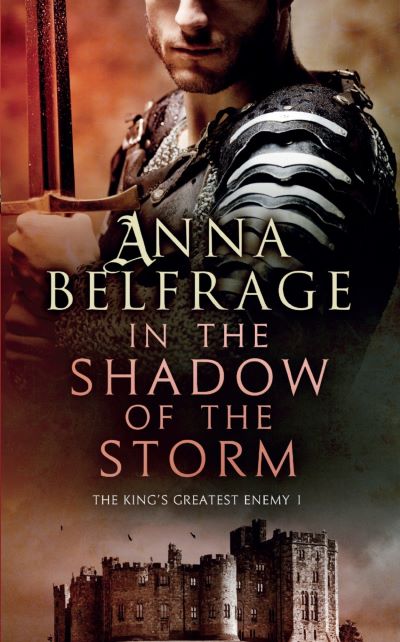
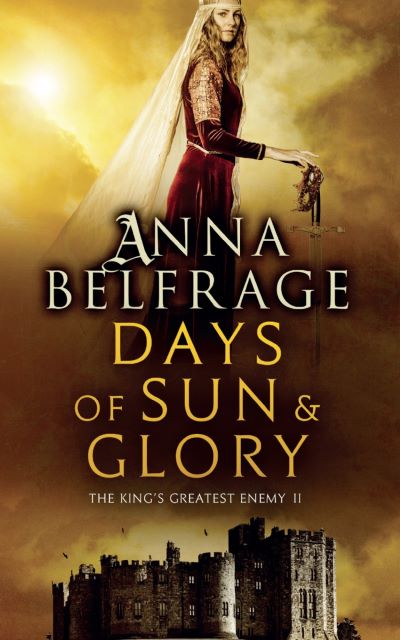
Book Blast: The King's Greatest Enemy Series by Anna Belfrage
The King’s Greatest Enemy Series by Anna Belfrage
A weak king, a rebellious baron. A kingdom on the brink of civil war, an adulterous wife and an ambitious royal favourite. A blackmailed bride and an honourable knight, torn apart by his loyalties to his lord, his wife and his future king. Welcome to the world of Adam de Guirande!

Book I: In the Shadow of the Storm
Adam de Guirande owes his lord, Roger Mortimer, much more than loyalty. He owes Lord Roger for his life and all his worldly goods, he owes him for his beautiful wife – even if Kit is not quite the woman Lord Roger thinks she is. So when Lord Roger rises in rebellion against the king, Adam has no choice but to ride with him – no matter what the ultimate cost may be. England in 1321 is a confusing place. Edward II has been forced by his barons to exile his favourite, Hugh Despenser. The barons, led by the powerful Thomas of Lancaster, Roger Mortimer and Humphrey de Bohun, have reasons to believe they have finally tamed the king. But Edward is not about to take things lying down... Adam fears his lord has over-reached, but Adam has other matters to concern him, first and foremost his new wife, Katherine de Monmouth. His bride comes surrounded by rumours concerning her and Lord Roger, and he hates it when his brother snickers and whispers of used goods. Kit has the misfortune of being a perfect double of Katherine de Monmouth – which is why she finds herself coerced into wedding a man under a false name. Domestic matters become irrelevant when the king sets out to punish his rebellious barons. The Welsh Marches explode into war, and soon Lord Roger and his men are fighting for their very lives. When hope splutters and dies, when death seems inevitable, it falls to Kit to save her man – if she can. In the Shadow of the Storm is the first in Anna Belfrage’s new series, The King’s Greatest Enemy, the story of a man torn apart by his loyalties to his lord, his king, and his wife.

Book II: Days of Sun and Glory
Adam de Guirande has barely survived the aftermath of Roger Mortimer’s rebellion in 1321. When Mortimer manages to escape the Tower and flee to France, anyone who has ever served Mortimer becomes a potential traitor – at least in the eyes of King Edward II and his royal chancellor, Hugh Despenser. Adam must conduct a careful balancing act to keep himself and his family alive. Fortunately, he has two formidable allies: Queen Isabella and his wife, Kit. England late in 1323 is a place afflicted by fear. Now that the king’s greatest traitor, Roger Mortimer, has managed to evade royal justice, the king and his beloved Despenser see dissidents and rebels everywhere – among Mortimer’s former men, but also in the queen, Isabella of France. Yet again, Kit and Adam are forced to take part in a complicated game of intrigue and politics. Yet again, they risk their lives – and that of those they hold dear – as Edward II and Mortimer face off. Once again, England is plunged into war – and this time it will not end until either Despenser or Mortimer is dead. Days of Sun and Glory is the second in Anna Belfrage’s series, The King’s Greatest Enemy, the story of a man torn apart by his loyalties to his lord, his king, and his wife.
Tuesday, January 14, 2020
Blog Tour Review: Salt the Snow by Carrie Callaghan
American journalist Milly Bennett has covered murders in San Francisco, fires in Hawaii, and a civil war in China, but 1930s Moscow presents her greatest challenge yet. When her young Russian husband is suddenly arrested by the secret police, Milly tries to get him released. But his arrest reveals both painful secrets about her marriage and hard truths about the Soviet state she has been working to serve. Disillusioned and pulled toward the front lines of a captivating new conflict, Milly must find a way to do the right thing for her husband, her conscience, and her heart. Salt the Snow is a vivid and impeccably researched tale of a woman ahead of her time, searching for her true calling in life and love.
My Thoughts:
I was really looking forward to reading this book. A pioneering reporter in a dangerous locale, going up against a terrifying regime to fight for justice and save the people she loves--sign me up. But unfortunately I had some issues with this story that prevented me from loving it as I'd hoped I would.
For starters, it's got a pretty slow-moving plot. There were long stretches where I felt like not much happened, and I found myself skimming to get to the more interesting parts. I'm also not sure the dual timeline structure served the story well. There's not much distance between the timelines as they alternate between the time Milly met her husband and the aftermath of his arrest, and so by the time they converged, it all sort of seemed anti-climactic.
But the biggest issue, for me, was Milly herself. I don't usually read up on unknown-to-me historical figures before I read novels about them because I like to be surprised by what's coming and go in without any preconceptions, but in this case, maybe I should have. Because it took me a really long time to warm up to Milly Bennett. She's selfish. She's a bit of a lush. She sleeps with married men. She does some other things that some readers may find morally questionable. But hardest for me was that she's a die-hard supporter of communism (though it is called socialism at the time). I understand the novelty of it during the Great Depression and the allure the ideal held for Americans who went to the Soviet Union in search of a better life. But very few of them actually found a better life there. Even in the face of desperate poverty, the lack of food, heat, and basic necessities, forced communal living, forced labor, and a tyrannical government jailing people who say things they don't like, Milly still defends the system. I found her very hard to empathize with until more than halfway through the book. Eventually Milly does lift the veil of idealism, and more of her underlying vulnerability comes through, allowing the reader to better understand why she behaves the way she does and to feel sorry for her in the situation she finds herself in. I finally started to feel her highs and lows, her triumphs and tragedies as my own and became invested in the outcome of her story.
Tuesday, January 7, 2020
Blog Tour Q&A: Written in Their Stars by Elizabeth St. John
London, 1649. Horrified eyewitnesses to King Charles’s bloody execution, Royalists Nan Wilmot and Frances Apsley plot to return the king’s exiled son to England’s throne, while their radical cousin Luce, the wife of king-killer John Hutchinson, rejoices in the new republic’s triumph. Nan exploits her high-ranking position as Countess of Rochester to manipulate England’s great divide, flouting Cromwell and establishing a Royalist spy network; while Frances and her husband Allen join the destitute prince in Paris’s Louvre Palace to support his restoration. As the women work from the shadows to topple Cromwell’s regime, their husbands fight openly for the throne on England’s bloody battlefields.
But will the return of the king be a victory, or destroy them all? Separated by loyalty and bound by love, Luce, Nan and Frances hold the fate of England—and their family—in their hands.
A true story based on surviving memoirs of Elizabeth St.John’s family, Written in their Stars is the third novel in the Lydiard Chronicles series.
AVAILABLE ON AMAZON | OTHER ERETAILERS
Hi Liz! Thank you for visiting Let Them Read Books!
The heroine of your first book, and whose children we follow in subsequent books, Lucy St. John, is your ancestress. Can you tell us a bit about her and what inspired you to write her story?
Lucy’s name jumped off the page in a 17th Century memoir I discovered in Nottingham Castle. I was researching our family genealogy at the time, so I followed the thread and came upon the story of her life, recorded by her daughter Lucy Hutchinson. Although written almost 400 years ago, her daughter’s account of her mother read like a novel:
She was of a noble family, being the youngest daughter of Sir John St.John, of Lidiard Tregooze in the county of Wilts; her father and mother died when she was not above five years of age, and yet at her nurse’s, from whence she was carried to be brought up in the house of the Lord Grandison, her father’s youngest brother; an honourable and excellent person, but married to a lady so jealous of him, and so ill-natured in her jealous fits, to anything that was related to him, that her cruelties to my mother exceeded the stories of stepmothers.Reading further, I learned Lucy St.John lived in the Tower of London for thirteen years, survived England’s terrible civil war, and that her children fought on opposite sides in the conflict. Hooked.
Written in Their Stars is the third book in a trilogy. What sort of challenges does writing a series present, particularly in bringing everything together in the last installment?
Writing biographical historical fiction has its positive sides – one of which is that you cannot deviate from real-life timelines. This is also one of the biggest challenges, for bending fact to suit fiction is not what I wanted to do. The full timeline of the lives of the family looked pretty even when I diagrammed it for the series. Once I started writing, I realized that as with any life, there can be long periods of inactivity and sudden bursts of action. Add the fact that you’re researching events that are 400 years old, and a main challenge is to keep the pace and tension balanced and compelling for the readers while still creating stand-alone novels that can be enjoyed by themselves.
Tuesday, December 17, 2019
Blog Tour Excerpt: Beyond the Moon by Catherine Taylor
Publication Date: June 25, 2019
The Cameo Press Ltd
eBook & Paperback; 496 Pages
Genre: Historical Fiction/Time Travel

Outlander meets Birdsong is this haunting debut timeslip novel, where a strange twist of fate connects a British soldier fighting in the First World War and a young woman living in modern-day England a century later.
*Shortlisted for the Eharmony/Orion Write Your Own Love Story Prize 2018/19
In 1916 1st Lieutenant Robert Lovett is a patient at Coldbrook Hall military hospital in Sussex, England. A gifted artist, he’s been wounded fighting in the Great War. Shell shocked and suffering from hysterical blindness he can no longer see his own face, let alone paint, and life seems increasingly hopeless.
A century later in 2017, medical student Louisa Casson has just lost her beloved grandmother – her only family. Heartbroken, she drowns her sorrows in alcohol on the South Downs cliffs – only to fall accidentally part-way down. Doctors fear she may have attempted suicide, and Louisa finds herself involuntarily admitted to Coldbrook Hall – now a psychiatric hospital, an unfriendly and chaotic place.
Then one day, while secretly exploring the old Victorian hospital’s ruined, abandoned wing, Louisa hears a voice calling for help, and stumbles across a dark, old-fashioned hospital room. Inside, lying on the floor, is a mysterious, sightless young man, who tells her he was hurt at the Battle of the Somme, a WW1 battle a century ago. And that his name is Lieutenant Robert Lovett…
Two people, two battles: one against the invading Germans on the battlefields of 1916 France, the other against a substandard, uncaring mental health facility in modern-day England. Two journeys begun a century apart, but somehow destined to coincide – and become one desperate struggle to be together.
Part WW1 historical fiction, part timeslip love story – and at the same time a meditation on the themes of war, mental illness, identity and art – Beyond The Moon sweeps the reader on an unforgettable journey through time. An intelligent read, perfect for book clubs.
For fans of Diana Gabaldon, Amy Harmon, Beatriz Williams, Kate Quinn, Kristin Hannah, Kate Morton, Susanna Kearsley and Paullina Simons.
AMAZON | INDIEBOUND
Praise:
“A poignant and stirring love story… Taylor’s accomplished, genre-bending book succeeds as a WW1 historical novel and a beguiling, time travel romance… The sharply written narrative deftly moves back and forth between the past and present.” — Kirkus Reviews
“A time travel romance, yet so much more than that. It is also an unflinching portrait of the horrors of war, and a look at the torturous extremes a human soul can endure. It is a sonnet to the transformative power of love, even as it is also a criticism of the futility and pointless destructiveness of war.” — Shaylin Gandhi, author of By The Light of Embers
Excerpt:
Monday, December 2, 2019
Blog Tour Q&A: The Girl I Left Behind by Andie Newton
What would you risk to save our best-friend?
As a young girl, Ella never considered that those around her weren’t as they appeared. But when her childhood best-friend shows Ella that you can’t always believe what you see, Ella finds herself thrown into the world of the German Resistance.
On a dark night in 1941, Claudia is taken by the Gestapo, likely never to be seen again, unless Ella can save her. With the help of the man she loves, Ella must undertake her most dangerous mission yet and infiltrate the Nazi Party.
Selling secrets isn’t an easy job. In order to find Claudia, Ella must risk not only her life, but the lives of those she cares about.
Will Ella be able to leave behind the girl of her youth and step into the shoes of another?
Perfect for fans of The Tattooist of Auschwitz, The German Midwife and Kate Furnivall.