Wednesday, July 20, 2022

On Hiatus


Hi there! Let Them Read Books is on hiatus for the foreseeable future. You can still check out what I'm reading on GoodreadsThanks for understanding!

Saturday, August 28, 2021

Cover Reveal: And by Fire by Evie Hawtrey

And by Fire
by Evie Hawtrey

Published by: Crooked Lane Books
Release Date: May 10, 2022
ISBN13: 978-1643859934


Nigella Parker, Detective Inspector with the City Police, has a deeply rooted fear of fire and a talent for solving deadly arson cases. When a charred figure is found curled beside Sir Christopher Wren’s Monument to the Great Fire of London, Nigella is dragged into a case pitting her against a murderous artist creating sculptures using burnt flesh.

Nigella partners with Colm O’Leary of Scotland Yard to track the arsonist across greater London. The pair are more than colleagues—they were lovers until O’Leary made the mistake of uttering three little words. Their past isn’t the only buried history as they race to connect the dots between an antique nail pulled from a dead man’s hands and a long-forgotten architect dwarfed by the life’s work of Sir Christopher Wren.

Wren, one of London’s most famous architects, is everywhere the pair turn. Digging into his legacy leads the DCIs into the coldest of cold cases: a search for a bookseller gone missing during the Great Fire of London. More than 350 years earlier, while looking for their friend, a second pair of detectives—a lady-in-waiting to the Queen and a royal fireworks maker—discovered foul play in the supposedly accidental destruction of St. Paul’s Cathedral…but did that same devilry lead to murder? And can these centuries-old crimes help catch a modern-day murderer?

As Nigella and O’Leary rush to decode clues, past and present, London’s killer-artist sets his sights on a member of the investigative team as the subject of his next fiery masterpiece.


Praise for AND BY FIRE:

“BONES meets the Restoration Court in Evie Hawtrey's AND BY FIRE, a taut dual-timeline mystery that races along at the pace of an inferno! . . . Fresh, dynamic, and crisply researched, AND BY FIRE WILL appeal to histfic fans and mystery readers alike—I couldn't put this one down!"

—Kate Quinn, New York Times Bestselling Author of The Alice Network


🔥 PRE-ORDER LINKS ðŸ”¥


Amazon: https://bit.ly/And_by_Fire_Amazon

Hudson Booksellers https://bit.ly/And_by_Fire_Hudsons

IndieBound https://bit.ly/And_By_Fire_Indiebound

Barnes & Noble https://bit.ly/And_by_Fire_Barnes_Noble


Learn more at www.eviehawtrey.com

Thursday, July 29, 2021

Guest Post: Landscape of a Marriage by Gail Ward Olmsted

Please join me in welcoming Gail Ward Olmsted to Let Them Read Books! Gail is celebrating the release of her newest novel, Landscape of a Marriage, and I'm thrilled to have her here today with a guest post about the inspiration for her story, Frederick Law Olmsted and his wife, Mary.

Central Park was only the beginning...

A marriage of convenience leads to a life of passion and purpose. A shared vision transforms the American landscape forever.

New York, 1858: Mary, a young widow with three children, agrees to marry her brother-in-law Frederick Law Olmsted, who is acting on his late brother’s deathbed plea to "not let Mary suffer”. But she craves more than a marriage of convenience and sets out to win her husband’s love. Beginning with Central Park in New York City, Mary joins Fred on his quest to create a 'beating green heart' in the center of every urban space.

Over the next 40 years, Fred is inspired to create dozens of city parks, private estates and public spaces with Mary at his side. Based upon real people and true events, this is the story of Mary’s journey and personal growth and the challenges inherent in loving a brilliant and ambitious man. 

Amazon  |  Goodreads 

Landscape of a Marriage: Frederick Law Olmsted & Mary Perkins Olmsted

By all accounts, they were an unlikely couple right from the start. They met at the home of mutual friends when Mary was just 18. Orphaned at an early age, she was raised by her grandparents and attended school in Staten Island, NY. She was an outspoken young woman who loved art and French literature. Fred was 27, a gentleman farmer who had previously spent time as a merchant seaman and a newspaper reporter, after dropping out of Yale University. He had dated plenty of women, but often confided to friends that he was likely to remain a bachelor for life. 

After meeting her for the first time, Fred was overheard remarking to a friend, “Mary is just the thing for a rainy day. Not to fall in love with, but to talk with.”  Meanwhile, Mary fell in love with Fred’s younger brother John, a recent Yale grad, and soon after, the two became engaged. 

Mary and John married in 1851 and honeymooned in Italy. Over the next five years, they had three children: John Charles, Charlotte and Owen. Never in the best of health, John was diagnosed with tuberculosis, prompting the family of five to travel throughout Europe in search of a cure.

Meanwhile, Fred had been in and out of relationships with a number of women and was briefly engaged to one of them. The engagement was broken by the young woman’s mother in a note to Fred detailing her daughter’s concerns for their future together. Fred was now more convinced than ever that marriage was not in the cards for him and he began to devote all of his time to his latest project--designing a public park out of an 800-acre plot of swampy land in Manhattan.

Wednesday, May 5, 2021

Blog Tour Excerpt: The Most Beautiful Girl in Cuba by Chanel Cleeton

The Most Beautiful Girl in Cuba
by Chanel Cleeton
Berkley Trade Paperback; May 4, 2021

At the end of the nineteenth century, three revolutionary women fight for freedom in New York Times bestselling author Chanel Cleeton's captivating new novel inspired by real-life events and the true story of a legendary Cuban woman--Evangelina Cisneros--who changed the course of history.

A feud rages in Gilded Age New York City between newspaper tycoons William Randolph Hearst and Joseph Pulitzer. When Grace Harrington lands a job at Hearst's newspaper in 1896, she's caught in a cutthroat world where one scoop can make or break your career, but it's a story emerging from Cuba that changes her life.

Unjustly imprisoned in a notorious Havana women's jail, eighteen-year-old Evangelina Cisneros dreams of a Cuba free from Spanish oppression. When Hearst learns of her plight and splashes her image on the front page of his paper, proclaiming her, "The Most Beautiful Girl in Cuba," she becomes a rallying cry for American intervention in the battle for Cuban independence.

With the help of Marina Perez, a courier secretly working for the Cuban revolutionaries in Havana, Grace and Hearst's staff attempt to free Evangelina. But when Cuban civilians are forced into reconcentration camps and the explosion of the USS Maine propels the United States and Spain toward war, the three women must risk everything in their fight for freedom.


Excerpt

“I’m here for a job if you have one. As a reporter. I’ve spent the last few years writing for smaller papers, getting experience where I could.” I gesture to the leather folio in my lap. “I’ve brought samples of my work if you’d like to look at them. They’re not necessarily the kinds of stories I want to cover, but they’re a start.”

“Why do you wish to work here, Miss Harrington?” Pulitzer asks, making no move to take the folio from me.

“Because of the stories you cover, the impact you have. The World has one of the largest circulations in the world.”

Indeed, Mr. Pulitzer has just slashed the World’s price to one cent, saying he prefers power to profits, circulation the measure by which success is currently judged.

“You have the opportunity to reach readers, to bring about change, to help people who desperately need assistance,” I add. “I’ve admired the work you’ve done for years. You’ve long set the tone the rest of the New York newspaper industry follows. You’ve filled a gap in the news, given a voice to people who wouldn’t have otherwise had one. I’ve read the articles you wrote when you were a reporter yourself in St. Louis, and I admire the manner in which you address society’s ills. You’ve revolutionized the newspaper. I want to be part of that.”

Tuesday, April 20, 2021

Guest Post by Rebecca Duvall Scott, Author of When Dignity Came to Harlan

Please join me in welcoming Rebecca Duvall Scott to Let Them Read Books! Rebecca is celebrating the publication of her debut historical novel, When Dignity Came to Harlan, based on the true story of her great-grandmother. Read on for a glimpse into the family history behind the story!

I made up my mind right then and there that I would just have to wade into this move like wading into a pond or lake I'd never seen before - slow and steady, feeling around for my footing and trying to avoid the sharp edges at the bottom that you never see coming.

***

News of what really happened to me - to us - spread through town like wildfire. It caught from one dry gossip tree to another and burned them to the ground with shame.

***

"Y'can do this, child - show 'em why I call y'Dignity," my old friend winked at me.

Skillfully written and sure to draw you in to its pages, When Dignity Came to Harlan is set in the early 1900s and follows twelve-year-old Anna Beth Atwood as she leaves Missouri with her family dreaming of a better life in the coal-rich mountains of Harlan County, Kentucky. Anna Beth’s parents lose everything on the trip, however, and upon asking strangers to take their girls in until they get on their feet, Anna Beth and her baby sister are dropped into the home of Jack and Grace Grainger – who have plenty of problems of their own. Anna Beth suffers several hardships during her time in Harlan, and if it wasn’t for her humble and wise old friend who peddles his wisdom along with his wares, all would be lost.   

Based on a true family history, this is a story of heartbreak and hope, challenges and perseverance, good and evil, justice and merciful redemption. It exemplifies the human experience in all its many facets and shows what it means to have real grit. 

Take the journey with us and see how, with the unseen hand of God, one girl changed the heart and soul of an entire town.  


Every person’s heritage is sacred, but what if yours had the makings of an amazing story? I spent a lot of my childhood at my grandmother’s kitchen table, mesmerized by the anecdotes of our forebears. I could see my great-grandmother, May Wood Elliott Kerr, being packed into a covered wagon with three of her sisters at the tender age of five. She would leave her eldest sister, who was married, behind and journey from Leadwood, Missouri, to Edmonson County, Kentucky, in search of a better life. Upon arrival, however, her parents had no money or place to stay, so they asked neighbors to take the girls in until they could get on their feet. The sisters were parceled out to strangers to earn their room and board, and May, unknowingly, was put into a very harsh home. The saddest part is that her parents never came back, and the girls grew up separated in foster care with many challenges to overcome. 

You know how bad it was? Besides the stories passed down through the generations, we have found documents that list my great-grandmother on the 1910 census as a servant in the foster home … as well as her first marriage certificate where her parents’ names are left blank! She was only five when they left her, remember, so until she reconnected with her older sisters, she didn’t even remember her parents’ names. Among the few photographs that survived the tumultuous time, my favorite is the one where she is holding a cat in front of her foster house. May cut out the man and his wife but kept it because she liked the cat!

I began taking notes for this Christian historical fiction novel in honor of my great-grandmother and grandmother when I was sixteen … which is a good thing because my grandmother suffered a stroke that took her ability to communicate ten years later. I turned in the first 70 pages of the manuscript to my creative writing professor in college when I was a senior, and on graduation day, he shook my hand and said, “Rebecca – please finish your story.” After becoming a wife and a mother, I did indeed turn back to Anna Beth Atwood, the character based on May Wood Elliott Kerr, who I had left in Harlan. I realized I couldn’t have finished it a moment before I did because I had to grow up myself and gain important life experiences to even do it justice. It is a deep-hearted book, and a dream come true. I am grateful the story chose me.

Thursday, April 15, 2021

Guest Post by Jean M. Roberts, Author of The Heron

Please join me in welcoming Jean M. Roberts to Let Them Read Books! Jean is celebrating the publication of her newest historical novel, The Heron, and I'm pleased to have her here today with a guest post about the historical story world her characters inhabit!

The past calls to those who dare to listen…

An invitation arrives; Abbey Coote, Professor of American Studies, has won an extended stay in an historic B&B, Pine Tree House. The timing is perfect. Abbey is recovering from an accident which left her abusive boyfriend dead and her with little memory of the event.

But her idyllic respite soon takes a terrifying turn. While exploring the house, Abbey comes face to face with Mary Foss, a woman dead for 350 years. Through a time/mind interface, Abbey experiences the horrors of Mary’s life, living at the edge of the civilized world in the 1690’s New England.

As Abbey faces her worst fears, she struggles to free them both from the past.


The Heron is a blend of passion and creative energy, woven together to form a single work. I have always loved history. As an American, I also appreciate and enjoy our unique history as a people and a country. There was a time when immigrants to New England were not quite American and not fully English, a very interesting period in our history!

From its inception, the Massachusetts Bay Colony, which from time-to-time controlled New Hampshire was a virtual theocracy. It did not become a Royal Colony until 1691. The Puritan elite who ruled Massachusetts quickly dropped their Anglican pretensions and set up a system of congregation churches. A staunch, rigid religion which controlled society, it believed most people were damned to hell and espoused an angry righteous God. Each church chose and hired their own minister. Attendance was mandatory and abstainers were fined. Services held in unheated wooden buildings could last for hours. The fiery ministers exhorting his flock to fear his maker.

Women, children, servants and slaves were under the household government of their father/husband/master. The population was litigious; the quarterly courts were filled with cases of slander and trespass. Neighbors were quick to turn on each other, and report each other’s misdeeds.  Women who did not conform, who strayed too far from accepted norms, might find themselves accused of witchcraft. Physical punishment was not only tolerated but encouraged. Men who did not chastise their wives were seen as weak. Abuse was frequent; a part of daily life.

Violence came from without as well. As much as we would like to believe that the land of the ‘new world’ was there for the taking, the Native Americans resisted the takeover of what was their home. The result was frequent attacks and several full-scale wars between the colonists and the native population. Juxtaposed to this frightening, conformist world were the glittering courts of Europe. Hard as it is to believe, but actions taken by European governments, thousands of miles and an ocean away played havoc on the struggling colonies. From 1688 to 1697 King William’s War, the first of four French and Indian Wars raged across New England, sparked by the continental War of the Grand Alliance. Waves of French soldiers and their native allies, swept out of Canada to attack the fledgling towns, defended only by their local militias.

The colonists of New Hampshire built garrison houses, thick-walled buildings, surrounded by stockade walls to provide shelter during times of upheaval. I have found many ancestors who were killed in these attacks, many scalped before they died. Others were taken as captives to Canada, some never seen again. For years at a stretch, they lived in daily fear of attack.

The psychic scars left by living under such conditions must have been almost unbearable. One of the main accusers during the Salem Witch Trials, Mercy Lewis, survived the attack on Casco Bay, Maine, in which her entire family was killed. It is believed that the event affected her deeply. This is the world of The Heron.

About the Author:

Jean M. Roberts is the author of three novels. Weave a Web of Witchcraft, Blood in the Valley, and The Heron. She writes historical fiction with a special focus on American history. Her novel Blood in the Valley was reviewed by the Historical Novel Society.  Jean was born in Boston, Massachusetts, and has deep New England roots. She is a veteran of the U.S. Air Force and lives in Texas with her husband. 

WEBSITE  |  AMAZON  |  TWITTER  |  FACEBOOK  |  INSTAGRAM

Tuesday, April 6, 2021

Guest Post by Dianna Rostad, Author of You Belong Here Now

Please join me in welcoming Dianna Rostad to Let Them Read Books! I've had the pleasure of Dianna's friendship for several years now, and I'm thrilled to have her here today in celebration of the publication of her debut historical novel, You Belong Here Now! Read on to learn how her dad helped her write this book and see some photos that helped inspire the story!

Montana 1925: An Irish boy orphaned by Spanish flu, a tiny girl who won’t speak, and a volatile young man who lies about his age to escape Hell’s Kitchen, are paraded on train platforms across the Midwest to work-worn folks. They journey countless miles, racing the sun westward.

Before they reach the last stop, the oldest, Charles, comes up with a daring plan, and alone, they set off toward the Yellowstone River and grassy mountains where the wild horses roam.

Fate guides them toward the ranch of a family stricken by loss. Nara, the daughter of a successful cattleman, has grown into a brusque spinster who refuses the kids on sight. She’s worked hard to gain her father’s respect and hopes to run their operation, but if the kids stay, she’ll be stuck in the kitchen.

Nara works them without mercy, hoping they’ll run off, but they buck up and show spirit, and though Nara will never be motherly, she begins to take to them. So, when Charles is jailed for freeing wild horses that were rounded up for slaughter, and an abusive mother from New York shows up to take the youngest, Nara does the unthinkable, risking everything she holds dear to change their lives forever.


My Father’s Bookshelf

One Christmas my father drove down to Texas and he brought a bunch of old photos of the family ranches in Montana, and stories about how his family lived in this beautiful, but unforgiving land. One picture I always remember is of my grandfather’s old ranch house with a small windmill on the top of it. My grandfather had written a note that he’d put that windmill on there as a boy, hoping it would power just one light bulb—and it did for a time. He tells a great story about walking through the snow near the train tracks to get a wet car battery to store and convert the power from the windmill. My grandfather became an electrician later. All these photos broke open a whole big world where I could see my characters falling into place. I decided then to set You Belong Here Now in 1925 Montana.

My father was pretty excited, and we went down to the library straight away, and later on, he gave me a list of recommendations for books written by writers from Montana or set in the Big Sky state. These books helped me frame the mindset and everyday lives of people living in this quiet, rural place.  

Larry Watson, Montana 1948, White Crosses
Ivan Doig, Sweet Thunder, 
Richard Wheeler, Winter Grass
Ray Grensten, Tracks of the Iron Horse
Elmer Kelton, The Man Who Rode Midnight

From there I discovered:

Judy Blunt, Breaking Clean
Margaret Bell, When Montana and I Were Young
Barbara Van Cleve, Hard Twist
Spike Van Cleve, Forty Years’ Gatherin’s 

As the manuscript began to take shape, he would often read my manuscript for me. One time, he came back with the advice to cut the man fight out of the book, as he didn’t think guys would really believe it. I told him I needed it, and could he help me make it better. He sent me a link to a YouTube video of an old Charles Bronson movie set in New Orleans of an illegal fight much like mine in the book. It helped tremendously. All the goings on of the people watching a fight like that, how it was run by the men putting up the fighters, all those little details gave credence to my scene. The scene was cut after many versions, but I’ll always remember him sending me that video. Or the time we argued about whether butane was available in 1925. Throughout the process of bringing this book to the world, my father was with me every step of the way, giving me advice on rifles vs. shotguns, how they were loaded, cocked, etc., and lots of good feedback on old cars from that era, as he is a great hobbyist of early 20th century automobiles. 

Friday, March 26, 2021

Q&A with Brenda Sparks Prescott, Author of Home Front Lines

Please join me in welcoming Brenda Sparks Prescott to Let Them Read Books! Brenda is celebrating the release of her debut historical novel, Home Front Lines, and I'm thrilled to have her here today with a Q&A!

In 1962 tensions are rising between the United States and the Soviet Union. But it is the everyday tensions of home, family, and military life that are top of mind for military spouse and African American Betty Ann Johnson in D.C. and Cuban Lola Montero who is asked to cook for the Soviet troops amassing on her island. At a time when many Americans feel unsettled and fearful of nuclear war, these women harness their agency to prepare their families for the worst in Home Front Lines by Brenda Sparks Prescott.

When Betty Ann catches wind that military preparations are being made for something more than just practice drills, she gathers a small band of military spouses to develop an evacuation plan for their children. Across the Florida Straits, Lola accidentally witnesses the installation of a Soviet missile. She and her sisters secretly make plans to send their children to Florida without their husbands’ knowledge. The two women are on opposing sides of the conflict, but they share the same fierce determination in protecting their children.

Home Front Lines is a story of strong and determined women. It is a story of BIPOC historical fiction in the 20th century, a genre that too often leaves out narratives not directly tied to the World Wars, the Great Migration, or Civil Rights movement. But these communities existed in every time and place, and their stories deserve to be told. 


Hi Brenda! Welcome to Let Them Read Books!

You've had short fiction published in a variety of literary magazines - why the switch to writing a novel?

Brenda Sparks Prescott: I have always been interested in long form fiction. My initial story ideas are often too complex for a short form, especially when coupled with my habit of asking “what if” while building the world in which each story lives. In fact, the original take on what is now Home Front Lines was a triptych story that was about 40 pages long. One of my mentors who was also an editor of a literary journal said it was too long for a short story and too short for a novella. He suggested I get rid of one or two of the three primary elements and make it into a short story. Instead, I kept asking “what if,” which took my original exploration deeper and eventually resulted in this novel. The short form wasn’t completely lost, though, as chapters from an earlier version of the novel were published as stand-alone short stories in literary journals.

How has your experience with Solstice Literary Magazine and the MFA program informed your writing?

Brenda Sparks Prescott: Solstice Literary Magazine and the Solstice MFA program have a common origin in terms of their visionary founders, but they are separate entities that involve overlapping communities. It has been immensely nourishing to be part of these communities, which embody the concept of inclusive excellence through their intentional actions to support diverse voices. I can’t imagine getting this project to publication without their support.

Tuesday, March 23, 2021

Guest Post: Celestine by Azriel Hope

Please join me in welcoming Azriel Hope to Let Them Read Books! I'm pleased to have Azriel here today with a guest post about her inspiration for her new historical romance, Celestine. Read on and check out some of the images she used to bring her story world to life!

A 1900's Parisian Fairytale Romance about the Courtesan who came to Christmas Dinner. Celestine is a rags to riches love story that will take your heart on an arduous journey from heartbreak to whatever lies beyond.

Inspired by the Moulin Rouge and Bridgerton, Celestine will take you behind the curtains of the famed Palais Rose to meet its shining star, the most coveted courtesan in all of Paris.

Adrien Louis is a rich merchant successful in international trading who is in Paris for the World's Fair. With business to attend, he shuts himself away in his cold and forgotten townhouse, left empty after the death of his wife and infant son four years prior.

Ravenously curious sisters who reside across the street notice the arrival of the dashing Monsieur Louis and each plot to entrap him in marriage. Both lonely and unattended by their neglectful and business-minded father who has no interest in securing them matches, they dream of the day when Monsieur Louis will sweep one of them away.

Lost to his melancholy and ready to be rid of the world, Monsieur Louis joins a business associate at the Palais Rose to appease his client's interest. There Adrien sees the stunning Celestine and despite his dark mood, finds himself drawn to her. After paying for an hour's conversation with the bright spirited Celestine, Adrien decides to bring her as his companion to a Christmas Feast his neighbors have insisted he attend. When Adrien realizes how hungry Monsieur Baudelaire's two daughters are to make a match with him, he hires Celestine as a means to thwart them. What he hasn't bargained for is that the beautiful Celestine might just capture his cold heart if only he'd let her in...which he vows to never do.

Celestine is a lightly steamy stand-alone historical romance that will have you clutching your pearls...


I ghostwrite for a few bestselling romance authors, and for them I write contemporary alpha male, billionaire romances with enough steam to drive a locomotive. As a writer for my own pen name, I play with different levels of steam and storytelling. Well, cut to my screenwriting partner and I writing a Christmas romance movie for a very famous Christmas Romance Television Channel. (Which I can’t announce yet because it hasn’t been announced on the channel.) 

I am in a Zoom meeting for this conservative, family-oriented romance brand and my partner and I are talking about the story, and suddenly I feel like the whore who came to Christmas dinner. I almost laughed out loud in the meeting. I mean, my ghostwriting characters are often pregnant with surprise babies before they have “the kiss.” And that road to pregnancy is fraught with graphic detail. I felt so scandalous! I wanted to blurt out, “Do you have any idea what I actually write for a living?” The analogy in my mind was like putting an adult toy store next to a church…So I figured, why not write a story about the Whore Who Came to Christmas Dinner?

Monday, March 15, 2021

Spotlight: From the Ashes by Melissa Addey

From the Ashes
by Melissa Addey

Published February 4, 2021
Genre: Historical Fiction
ebook/paperback; 318 pages

Rome, 80AD. A gigantic new amphitheatre is being built. The Emperor has plans for gladiatorial Games on a scale no-one has ever seen before. But the Games don’t just happen. They must be made. And Marcus, the man in charge of creating them, has just lost everything he held dear when Pompeii disappeared under the searing wrath of Vesuvius. Now it will fall to Althea, the slave woman who serves as his scribe, to ensure the Colosseum is inaugurated on time – and that Marcus makes his way out of the darkness that calls to him. First in the Colosseum series. 


Excerpt:

“What were you thinking?”
The triclinium of my master’s house looks as though it has been turned into a brothel. The wall panels, which usually depict classical scenes befitting a grand holiday villa, have been repainted entirely since this morning with images more befitting… well, a brothel. The tables are opulently laid for tonight’s gathering and the couches for the guests are draped with elegant throws and plumped-up cushions, but my mistress is staring at the household slaves, who have all been stripped naked. Their newly plucked private parts have been painted in gold, the better to highlight them. They stand huddled together, faces drained with shock.
“Lucius! What were you thinking?”
My mistress is appalled. She comes from one of the best patrician families, albeit a rather impoverished and distant branch. In marrying my master, a handily wealthy import-exporter from the equestrian class, she has had to put up with many failings of etiquette over the past few years, most of which she is adept at smoothing over, but this time he has gone too far. She stands in the doorway, trying to look away from the images on the walls, which leave nothing to the imagination. Men with men, women with women, men with women, women with beasts… all in fresh, bold paint, some of it significantly larger than life. Her young daughter is coming, and she puts out an unseeing hand behind her back, seeking to push the girl away.
“To your room, Lucilla,”
“But mother –”
“To your room!”
Lucilla reluctantly departs. I’d like to follow her, but my mistress is blocking the doorway and I don’t want to draw attention to myself. Although I am the only slave fully clothed, I fear that my apparel might offend her even more than if I were naked. I stay still, pressed against the wall in the corner.
“Splendid, isn’t it,” says my master, casting a lingering glance over one of the slave boys. “It’ll be a memorable evening.”
“Memorable?” My mistress’ eyes are bulging out of her head, her already pale skin drained white. “It looks like something organised by –” her voice drops to a hiss “– Nero!”
“Fit for an emperor?” he asks. Deliberately misunderstanding.
“Fit for a madman,” she spits back. “I cannot be seen at such a gathering!”
“Just as well I’ve arranged a substitute for you then, isn’t it?” he says.

Sunday, March 14, 2021

Blog Tour Guest Post: The Steel Beneath the Silk by Patricia Bracewell

Please join me in welcoming Patricia Bracewell to Let Them Read Books! Patricia is touring the blogosphere with her brand new release, the long-awaited conclusion to her Emma of Normandy trilogy, The Steel Beneath the Silk. I had the pleasure of helping Patricia design the cover, and I'm thrilled to have her here today with a guest post about the women who have been left out of the chronicles of history and how she is giving them a voice. Read on and enter to win a copy of The Steel Beneath the Silk!

A breathtaking conclusion to Bracewell’s Emma of Normandy Trilogy, brimming with treachery, heartache, tenderness and passion as the English queen confronts ambitious and traitorous councilors, invading armies and the Danish king’s power-hungry concubine.

In the year 1012 England’s Norman-born Queen Emma has been ten years wed to an aging, ruthless, haunted King Æthelred. The marriage is a bitterly unhappy one, between a queen who seeks to create her own sphere of influence within the court and a suspicious king who eyes her efforts with hostility and resentment. But royal discord shifts to grudging alliance when Cnut of Denmark, with the secret collusion of his English concubine Elgiva, invades England at the head of a massive viking army. Amid the chaos of war, Emma must outwit a fierce enemy whose goal is conquest and outmaneuver the cunning Elgiva, who threatens all those whom Emma loves.


My third novel about Emma of Normandy is set in the early 11th century during a period in England’s history when the kingdom was assaulted by wave after wave of viking armies that were determined on conquest. My working title was Perilous Tides, and for me that phrase had several meanings. It was a reference to the ocean tides that carried the vikings to England; to the tides of blood that were shed by English and vikings alike during that war; and to an actual tidal wave that devastated England in 1014. These events were all perilous for Emma and for the English. 

However, as I reached the end of one of many drafts of the novel it was clear to me that the working title didn’t do justice to the story that I’d written. As with my earlier books, I had attempted to do what the chroniclers of the 11th century did not. While the scribes reported battles, betrayals, murders, shifting alliances, the deaths of kings, even a tidal wave, they did not describe, except very, very obliquely, what was happening to the women. Reading the Anglo-Saxon Chronicle—the contemporary, recorded history of the time—one might come to the conclusion that there were no women in England at all during those years.  

Wednesday, February 3, 2021

Guest Post: In a Town Called Paradox by Richard Starks and Miriam Murcutt

Please join me in welcoming Richard Starks to Let Them Read Books! Richard is co-author with Miriam Murcutt of the just-released historical novel, In A Town Called Paradox. I'm so happy to have Richard here today with a guest post on how it’s the right details that help make a story come alive.

 
“I wasn’t looking for Marilyn Monroe when I bumped into her, even though I knew she was in town filming River of No Return…”

So begins In a Town Called Paradox, which asks the question: If each of us has a life story, then who determines how it unfolds and how it should end?

After her mother’s untimely death, the young Corin Dunbar is banished to live with her aunt Jessie, an obsessively religious spinster who runs a failing cattle ranch near a speck of a town called Paradox in southeast Utah. It’s the mid-1950s, and Corin hates her new life until the Big Five Hollywood studios arrive, lured by the fiery red-rock scenery that provides a perfect backdrop to the blockbuster Westerns they plan to film. Overnight, Paradox is transformed from a rural backwater to a playground for glamorous stars like Marilyn Monroe and Rock Hudson.

Seduced by the glitz of the movies, Corin finds work with the studios, but after a brush with the casting couch, she channels her growing ambitions into saving the ranch—the jewel of the Dunbar family for three generations. When she falls for a charismatic stranger, her future seems bright, but a tragic accident she believes is her fault wrecks her dreams and forces her to make an agonizing decision that will change the course of her life.

Told mainly by Corin—now a middle-aged woman haunted by this watershed moment—In a Town Called Paradox is a compelling read that redefines the meaning of love. 


In A Town Called Paradox

The devil is in the detail – or so people say, usually in relation to contracts or international treaties. But detail is just as important in a novel – especially when, as authors, we are trying to draw readers into a fictional world they may not be familiar with.

Our latest novel, In A Town Called Paradox, is set in Utah during the 1950s, when the Big Five Hollywood studios descended on that state, lured by the fiery red-rock scenery that formed the perfect backdrop to the blockbuster movies they wanted to shoot. Their arrival turned rural backwaters – like our fictional town of Paradox – into playgrounds for glamorous stars such as Marilyn Monroe and Rock Hudson, and in the process upended the lives of the local residents. We thought this setting would be ideal (if it had worked for Hollywood, it should work for us), but to make it credible we needed to salt our scenes with telling detail that was both intriguing and – more importantly – authentic.

Thursday, November 26, 2020

Happy Holidays from Let Them Read Books!


Let Them Read Books is on hiatus through the holidays!

Thank you so much for your support throughout the year, a year that's reminded us of the importance of books to transport us in time and place!

Wishing you and yours a very merry season!

I'll see you in 2021!

Tuesday, November 24, 2020

Blog Tour Q&A with Mimi Matthews, Author of Gentleman Jim

Please join me in welcoming bestselling author Mimi Matthews to Let Them Read Books! Mimi is touring the blogosphere with her new release, Gentleman Jim, and I recently had the chance to ask her some questions about writing this tale of romance and revenge!

She Couldn't Forget...

Wealthy squire's daughter Margaret Honeywell was always meant to marry her neighbor, Frederick Burton-Smythe, but it's bastard-born Nicholas Seaton who has her heart. Raised alongside her on her father's estate, Nick is the rumored son of notorious highwayman Gentleman Jim. When Fred frames him for theft, Nick escapes into the night, vowing to find his legendary sire. But Nick never returns. A decade later, he's long been presumed dead.

He Wouldn't Forgive...

After years spent on the continent, John Beresford, Viscount St. Clare has finally come home to England. Tall, blond, and dangerous, he's on a mission to restore his family's honor. If he can mete out a bit of revenge along the way, so much the better. But he hasn't reckoned for Maggie Honeywell. She's bold and beautiful--and entirely convinced he's someone else.

As danger closes in, St. Clare is torn between love and vengeance. Will he sacrifice one to gain other? Or, with a little daring, will he find a way to have them both?


Advance Praise:

"Tartly elegant. . . A vigorous, sparkling, and entertaining love story with plenty of Austen-ite wit."— Kirkus Reviews, starred review

"Matthews ups the ante with a wildly suspenseful romance..."— Library Journal, starred review

"Equally passionate and powerful...Mimi Matthews proves once again that she is a master of historical fiction in Gentleman Jim."— Readers' Favorite

"Rollicking and romantic, passionate and intriguing...Regency romance does not get any better than Gentleman Jim."— Relz Reviewz


Hi Mimi! Thanks so much for visiting Let Them Read Books!

What inspired you to write Gentleman Jim?

I’m a huge fan of Alexandre Dumas’s 1844 novel The Count of Monte Cristo, and of Henry Fielding’s 1749 novel The History of Tom Jones, a Foundling. I love the idea of hidden identities, and of justice deferred—but not denied.

Did your characters pop into your head fully formed or did they take shape as you wrote?

Maggie and Nicholas were pretty well formed in my mind when I started the story. Of course, they developed and changed as I wrote. Their growth from passionate reckless teens into (slightly) less reckless adults was part of their journey.

What was the most challenging aspect of writing this story?

I wrote the first few chapters of Gentleman Jim several years ago. I’ve grown as a writer since then, so it was a challenge to revise those early chapters and then write the remaining 70% of the story from scratch without losing the spark of inspiration I’d had in the beginning.

Wednesday, November 18, 2020

Book Blast: Betrayal by the Historical Fictioneers

Betrayal
by the Historical Fictioneers

Published: November 17, 2020
Formats: eBook; 436 pages
Genre: Historical short stories


"Loyalty breaks as easily as a silken thread."

Misplaced trust, power hunger, emotional blackmail, and greed haunt twelve characters from post-Roman Britain to the present day. And betrayal by family, lover, comrade can be even more devastating.

Read twelve tales by twelve accomplished writers who explore these historical yet timeless challenges from post Roman Britain to the present day.

AD455—Roman leader Ambrosius is caught in a whirlpool of shifting allegiances
AD940—Alyeva and cleric Dunstan navigate the dangers of the Anglo Saxon court
1185—Knight Stephan fights for comradeship, duty, and honour. But what about love?
1330—The powerful Edmund of Kent enters a tangled web of intrigue
1403—Thomas Percy must decide whether to betray his sovereign or his family
1457—Estelle is invited to the King of Cyprus’s court, but deception awaits
1483—Has Elysabeth made the right decision to bring Prince Edward to London?
1484—Margaret Beaufort contemplates the path to treason
1577—Francis Drake contends with disloyalty at sea
1650—Can James Hart, Royalist highwayman, stop a nemesis destroying his friend?
1718—Pirate Annie Bonny, her lover Calico Jack, and a pirate hunter. Who will win?
1849/present—Carina must discover her ancestor’s betrayer in Italy or face ruin.

“I read this anthology from start to finish in a matter of days…. Each story is gripping.”– Discovering Diamonds Reviews

About the Historical Fictioneers:

Hailing from two continents and five countries, the Historical Fictioneers include Judith Arnopp, Cryssa Bazos, Anna Belfrage, Derek Birks, Helen Hollick, Amy Maroney, Alison Morton, Charlene Newcomb, Tony Riches, Mercedes Rochelle, Elizabeth St John, and Annie Whitehead. 

The Historical Fictioneers can be reached via their Facebook Group at http://bit.ly/HistoricalFictioneers

Betrayal is offered as a FREE download from Amazon, Kobo, Apple Books and Barnes & Noble. Claim your eBook today: https://books2read.com/BetrayalAnthology

Tuesday, November 17, 2020

Guest Post: The Girl with the Silver Star by Rachel Zolotov

Please join me in welcoming Rachel Zolotov to Let Them Read Books! Rachel is celebrating the release of her debut historical novel, The Girl with the Silver Star, and I'm thrilled to have her here today with a guest post about the inspiration for the novel: her own family's harrowing history. Read on and grab the Kindle copy for only $2.99!

For the readers of The Nightingale and Lilac Girls, inspired by the true story of the author’s great-grandmother’s journey during World War II, The Girl with the Silver Star is the extraordinary story of a mother’s love and will to survive during one of history’s darkest time periods.

As a hailstorm of bombs begins to shatter the city of Minsk in Belarus, Raisa and her family run through the darkness of night to take cover. When Raisa, Abraham, and their daughters, Luba and Sofia, emerge from the bomb shelter, they find an unfamiliar city before them; chaos and terror burn in every direction. Fearing for their lives, they must leave at once to find the rest of their family. But before they are able to escape, Abraham is conscripted into the Russian Army and the family is forced to part ways. Raisa’s love and strength are put to the ultimate test as she finds herself on her own with her two young daughters in tow. How will she manage alone without her soulmate by her side?

Relying on hope, resourcefulness and courage, they walk, hitch hike and take trains heading for Uzbekistan, over 2,500 miles from home. Along the way they run from bombs, endure starvation, and face death.

Raisa finds solace in the women around her. Her mother, sisters, old friends and new help carry her through the difficult war years, but Raisa’s longing to reunite with Abraham still rages inside her heart. Will they ever see each other again? Will Raisa and her family find their way back to their homeland?

The Girl with the Silver Star is a captivating journey through war-torn Soviet Union as it illuminates a unique part of WWII history, the female heroes. Raisa’s journey is a tribute to the nameless women, their determination, bravery, grief and unwavering love during impossible times. Their stories shouldn’t be forgotten.  


It was early winter of 2016 and I had just finished reading The Nightingale by Kristin Hannah. As I turned the last page and closed the book, I started to think back to the stories my parents had told me about by family during WWII, and I suddenly realized that I didn’t really know much about what they went through. My family is Jewish, and they lived in Minsk, Belarus – I knew there had to be more to their story than just the few details I had overheard as a child. 

As a young girl, I could be often found evading bedtime by reading historical novels and memoirs from WWII under the covers with a flashlight. This fascination didn’t stop in adulthood, so how was it that I barely knew anything about my own family’s past?

I picked up the phone and called my mother, on a mission to find out more. I had my notebook ready to scrawl down all the details. A few minutes later, I had a page of notes, but barely any more information than I had already known. My mother explained that they didn’t talk about those times much. For obvious reasons, it was too painful of a memory to relive. There was, however, one detail that I didn’t already know. My great-grandmother Raisa and her two girls, Luba (my grandmother) and Sofia, evacuated to Uzbekistan during the war.

I was having a hard time imagining how many countless miles it took to get from Minsk to Tashkent. After a quick search, I discovered how incredibly far they had to travel; over 4,000 km. That’s about the same distance as New York to San Diego. They walked some of the way, and took trains for the rest. As a mother of two girls myself, I thought about taking that journey with them under those circumstances, and couldn’t fathom how they survived such a journey. I was instantly drawn to find as many of the puzzle pieces as I could.

That was all it took. One conversation and a few hours of research later, I was inspired. I needed to know more, and thus it began, The Girl with the Silver Star.

Friday, October 23, 2020

Blog Tour Excerpt: Prospects of a Woman by Wendy Voorsanger

Elisabeth Parker comes to California from Massachusetts in 1849 with her new husband, Nate, to reunite with her father, who’s struck gold on the American River. She soon realizes her husband is not the man she thought—and neither is her father, who abandons them shortly after they arrive. As Nate struggles with his sexuality, Elisabeth is forced to confront her preconceived notions of family, love, and opportunity. 

She finds comfort in corresponding with her childhood friend back home, writer Louisa May Alcott, and spending time in the company of a mysterious Californio Don. Armed with Ralph Waldo Emerson’s Self-Reliance, she sets out to determine her role in building the West, even as she comes to terms with the sacrifices she must make to achieve independence and happiness. 

Prospects of a Woman is a fresh, authentic retelling of the West that explores women’s contributions in California and shatters the stereotypes of the typical hard-boiled novel of the West that has captured the American imagination for over a century.


Praise: 

"Prospects of a Woman is a fascinating, complex, dark, and beautiful novel of women and sexuality on the frontier of the California gold strike days." 
— Douglas Glover, two-time Governor General's award-winning author of Elle

"I loved this surprisingly feminist story of Gold Rush-era California! Elizabeth Parker is a heroine to fall in love with--plucky, sensuous, courageous and clear-eyed. It is a rare and unusual pleasure to—finally—have a narrative of the Gold Rush told from a woman’s point of view."
—Janis Cooke Newman, author of Mary: Mrs. A. Lincoln

"Prospects of a Woman is thoughtful and thrilling. The landscape of California - the rough-scrabble mining towns, the wildness of the river and woods -- sings on every page."
—Alex Myers, author of the novels Revolutionary and Divide

"Prospects of a Woman is a riveting read about a woman who comes to California during the Gold Rush determined to escape societal constraints, find love and strike it rich. As a woman in a man’s world, she faces innumerable challenges but manages to rise above them. This is a bold, rollicking and satisfying tale, one that is hard to put down."
—Frances Dinkelspiel, award-winning journalist and author of the best-selling books, Tangled Vines and Towers of Gold

Excerpt:

“God offers to every mind its choice between truth and repose. Take which you please; you can never have both.” 

Hiking out of the steep gorge was goddamn difficult, going barefoot over all those sharp rocks and prickly pine needles. She couldn’t very well wear Henry’s man boots with her only fancy dress on her first visit to Coyoteville, so she wore nothing on her feet. Done feeling sorry for herself, she was fixing to find some fun of her own. That Yellow Dog loped up too close underfoot, and she tripped on a rock sticking up on the trail, falling hard on her knees and tearing her emerald-green silk dress nearly to the waist, showing her dingy drawers underneath. Yellow Dog lay down on the trail beside her while she cursed and cursed, holding her toe, ripped open and bleeding. When he whined and licked her bloody toe, she pushed his muzzle away irritated, and stood up. She pressed on, stepping slower and careful now, walking and walking up the hill, reaching the top just as dark fell. 

She limped over to a huge open-air tent lit with lanterns and lurked just outside, mesmerized. Wild with abandon, men culled from every race and nation mixed up crazy, dancing a twisted waltz with each other to a comic tune played out of time on a banjo, a fiddle, and two harmonicas. A bare-chested Nisenan accompanied the band with rattles tied ’round his ankles, strutting and gyrating and puffing like a grouse. Half the men wore pants patched front and back across their man parts with flour sacking that read Self-Rising Haxhall. Others wore sacks bearing the name of a Mexican hot chile. Having no women didn’t hinder the men, with some overcoming the difficulty by taking on the feminine role. Transfixed, Elisabeth studied the men and figured the ones wearing the patches were acting as women, prancing coy and light, following the lead of their men. Those not dancing cradled the arms of their partners, cheering and clapping ladylike, while the real men hooted and stomped furious to the bawdy music. 

Thursday, October 15, 2020

Blog Tour Q&A with Samantha Cohoe, Author of A Golden Fury

Please join me in welcoming Samantha Cohoe to Let Them Read Books! Samantha is touring the blogosphere with her debut YA historical fantasy novel, A Golden Fury, (which I'm reading now, btw, and it's so good), and I recently had the chance to ask her a few questions about writing historical fantasy. Read on and grab your copy today!

Set in eighteenth century England, Samantha Cohoe’s debut novel, A GOLDEN FURY (Wednesday Books; October 13, 2020), follows a young alchemist as she tries to save the people she loves from the curse of the Philosopher’s Stone. The streets of London and Oxford come to life as this historical fantasy unravels. Weaving together an alluring story of magic and danger, Samantha’s debut has her heroine making messy decisions as she toes the line between good and evil while it becomes blurred.

Thea Hope longs to be an alchemist out of the shadow of her famous mother. The two of them are close to creating the legendary Philosopher’s Stone—whose properties include immortality and can turn any metal into gold—but just when the promise of the Stone’s riches is in their grasp, Thea’s mother destroys the Stone in a sudden fit of violent madness.
 
While combing through her mother’s notes, Thea learns that there’s a curse on the Stone that causes anyone who tries to make it to lose their sanity. With the threat of the French Revolution looming, Thea is sent to Oxford for her safety, to live with the father who doesn’t know she exists.

But in Oxford, there are alchemists after the Stone who don’t believe Thea’s warning about the curse—instead, they’ll stop at nothing to steal Thea’s knowledge of how to create the Stone. But Thea can only run for so long, and soon she will have to choose: create the Stone and sacrifice her sanity, or let the people she loves die.


Hi Samantha! Thank you so much for stopping by today!

What inspired you to base your fantasy in a historical setting?

I love history! I’ve spent so much time reading history and historical fiction that I feel almost as much at home in the past as I do in the present day. One thing I really love about writing historical fiction is the way it lets you explore different times and different contexts. That’s interesting in its own right, and it also helps us reflect in a different way on our own time by contrast.

What drew you to this time period?

I love the late 18th century because of all the turmoil and change that came about specifically as the result of ideas. Ideas that make revolutions are exciting to me.

Did you get to do anything fun or learn something surprising during your research?

I really enjoyed all my alchemy research, but one particularly fun fact I ran across in the course of it is that there are researchers who try to work out which Chinese emperors may have died from taking alchemical elixirs!

What are the biggest challenges of blending fantasy with history?

I think the biggest challenges come from seeing the consequences of the changes you make to history. So let’s say alchemy did work, then how would our world be different? I cleverly avoided most of this through methods you’ll have to read the book to discover.

Wednesday, September 16, 2020

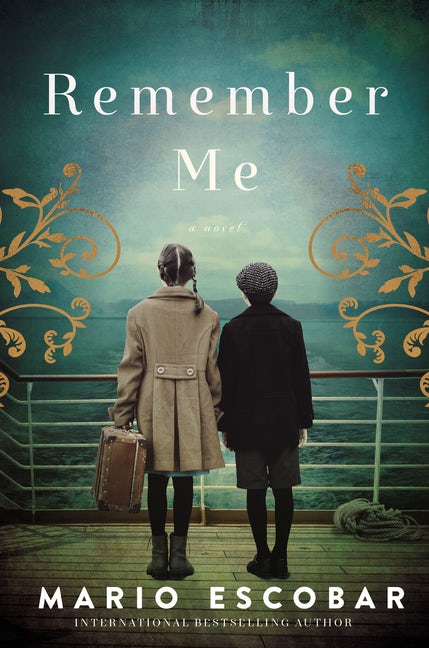
Blog Tour Spotlight: Remember Me by Mario Escobar


Remember Me: A Spanish Civil War Novel by Mario Escobar

Publication Date: September 15, 2020
Thomas Nelson
Paperback & eBook; 384 pages
Genre: Historical Fiction


Amid the shadows of war, one family faces an impossible choice that will change their lives forever.

Madrid, 1934. Though the Spanish Civil War has not yet begun, the streets of Madrid have become dangerous for thirteen-year-old Marco Alcalde and his younger sisters, Isabel and Ana. When Marco’s parents align themselves against General Franco and his fascist regime, they have no inkling that their ideals will endanger them and everyone they love—nor do they predict the violence that is to come.

When the Mexican government promises protection to the imperiled children of Spain, the Alcaldes do what they believe is best: send their children, unaccompanied, across the ocean to the city of Morelia—a place they’ve never seen or imagined. Marco promises to look after his sisters in Mexico until their family can be reunited in Spain, but what ensues is a harrowing journey and a series of heartbreaking events. As the growing children work to care for themselves and each other, they feel their sense of home, family, and identity slipping further and further away. And as their memories of Spain fade and the news from abroad grows more grim, they begin to wonder if they will ever see their parents again or the glittering streets of the home they once loved.

Based upon the true stories of the Children of Morelia, Mario Escobar’s Remember Me—now available for the first time in English—explores the agony of war and paints a poignant portrait of one family’s sacrificial love and endurance.

Amazon | Barnes and Noble | IndieBound


About the Author


Mario Escobar Golderos has a degree in History, with an advanced studies diploma in Modern History. He has written numerous books and articles about the Inquisition, the Protestant Reformation, and religious sects. He is the executive director of an NGO and directs the magazine Nueva historia para el debate, in addition to being a contributing columnist in various publications. Passionate about history and its mysteries, Escobar has delved into the depths of church history, the different sectarian groups that have struggled therein, and the discovery and colonization of the Americas. He specializes in the lives of unorthodox Spaniards and Americans.


Website | Facebook | Twitter | Goodreads


Blog Tour Schedule


Tuesday, September 15 Review at Nursebookie Review at WTF Are You Reading? Wednesday, September 16 Review at Amy's Booket List Feature at Let Them Read Books Friday, September 18 Review at 100 Pages a Day Saturday, September 19 Feature at The Green Mockingbird Monday, September 21 Feature at The Lit Bitch Feature at I'm All About Books Wednesday, September 23 Review at Passages to the Past Friday, September 25 Review at View from the Birdhouse Saturday, September 26 Feature at Bookworlder Sunday, September 27 Review at Reading is My Remedy Monday, September 28 Review at Hallie Reads Tuesday, September 29 Feature at What Is That Book About

Monday, September 14, 2020

Blog Tour Q&A with Mitchell James Kaplan, Author of Into the Unbounded Night

Please join me in welcoming Mitchell James Kaplan to Let Them Read Books! Mitchell is touring the blogosphere with his new historical novel, Into the Unbounded Night, and I recently had the chance to ask him a few questions about researching and writing this story. Read on and enter to win a copy of Into the Unbounded Night!

When her village in Albion is sacked by the Roman general Vespasian, young Aislin is left without home and family. Determined to exact revenge, she travels to Rome, a sprawling city of wealth, decadence, and power. A “barbarian” in a “civilized” world, Aislin struggles to comprehend Roman ways. From a precarious hand-to-mouth existence on the streets, she becomes the mistress of a wealthy senator, but their child Faolan is born with a disability that renders him unworthy of life in the eyes of his father and other Romans.

Imprisoned for her efforts to topple the Roman regime, Aislin learns of an alternate philosophy from her cellmate, the Judean known today as the Apostle St. Paul. As the capital burns in the Great Fire of 64 AD, he bequeaths to her a mission that will take her to Jerusalem. There, Yohanan, son of Zakkai, has been striving to preserve the tradition of Hillel against the Zealots who advocate for a war of independence. Responding to the Judeans’ revolt, the Romans—again under the leadership of Vespasian—besiege Jerusalem, destroying the Second Temple and with it, the brand of Judean monotheism it represents. Yohanan takes on the mission of preserving what can be preserved, and of re-inventing what must be reinvented.

Throughout Into the Unbounded Night, Aislin’s, Faolan’s, Vespasian’s, and Yohanan’s lives intertwine in unexpected ways that shed light on colonization and its discontents, the relative values of dominant and tyrannized cultures, and the holiness of life itself—even the weakest of lives.


Hi Mitchell! Thank you so much for stopping by Let Them Read Books!
 
What inspired you to write Into the Unbounded Night?

 
I wasn’t particularly thinking about writing a novel set in the first century. Nor did I decide to do so prior to undertaking the research. I simply became fascinated with the period. The characters emerged from the world I was exploring.
 
What kind of sources did you use as you were researching the time period?
 
Any and all sources. Of course, I read lots of books. I went to Roman sites in the UK, Italy, Israel, and Turkey. Questions arise in your mind, and then questions beget other questions. Why did the Romans feel it was necessary to destroy the Temple of Jerusalem? What were the underlying differences (cultural, ideological, political)? Why did Christianity and Rabbinic Judaism diverge in the first century? etc. It’s like you’re trying to fit together the pieces of a puzzle.
 
Did you learn anything in your research that surprised you?
 
Everything I learned surprised me. I hope I managed to convey some of that wonderment in INTO THE UNBOUNDED NIGHT.
 
What were the most rewarding and challenging aspects of writing this story?
 
The most rewarding thing, for me, is learning from my characters. I find their stories so fascinating, enriching, and moving. 

What I find most challenging, when writing any novel, is to get outside of it, back into the so-called real world, where I try to spend as little time as possible. (But honestly, I don't think it's more real than the so-called fictional worlds.)
 
What do you hope readers take away from the story?
 
That we can learn a lot from these people: how they perceived the universe; what mattered to them; what mistakes they made; and maybe, what mistakes we’re making.