Showing posts with label Ancient Rome. Show all posts

Monday, March 15, 2021

Spotlight: From the Ashes by Melissa Addey

From the Ashes
by Melissa Addey

Published February 4, 2021
Genre: Historical Fiction
ebook/paperback; 318 pages

Rome, 80AD. A gigantic new amphitheatre is being built. The Emperor has plans for gladiatorial Games on a scale no-one has ever seen before. But the Games don’t just happen. They must be made. And Marcus, the man in charge of creating them, has just lost everything he held dear when Pompeii disappeared under the searing wrath of Vesuvius. Now it will fall to Althea, the slave woman who serves as his scribe, to ensure the Colosseum is inaugurated on time – and that Marcus makes his way out of the darkness that calls to him. First in the Colosseum series. 


Excerpt:

“What were you thinking?”
The triclinium of my master’s house looks as though it has been turned into a brothel. The wall panels, which usually depict classical scenes befitting a grand holiday villa, have been repainted entirely since this morning with images more befitting… well, a brothel. The tables are opulently laid for tonight’s gathering and the couches for the guests are draped with elegant throws and plumped-up cushions, but my mistress is staring at the household slaves, who have all been stripped naked. Their newly plucked private parts have been painted in gold, the better to highlight them. They stand huddled together, faces drained with shock.
“Lucius! What were you thinking?”
My mistress is appalled. She comes from one of the best patrician families, albeit a rather impoverished and distant branch. In marrying my master, a handily wealthy import-exporter from the equestrian class, she has had to put up with many failings of etiquette over the past few years, most of which she is adept at smoothing over, but this time he has gone too far. She stands in the doorway, trying to look away from the images on the walls, which leave nothing to the imagination. Men with men, women with women, men with women, women with beasts… all in fresh, bold paint, some of it significantly larger than life. Her young daughter is coming, and she puts out an unseeing hand behind her back, seeking to push the girl away.
“To your room, Lucilla,”
“But mother –”
“To your room!”
Lucilla reluctantly departs. I’d like to follow her, but my mistress is blocking the doorway and I don’t want to draw attention to myself. Although I am the only slave fully clothed, I fear that my apparel might offend her even more than if I were naked. I stay still, pressed against the wall in the corner.
“Splendid, isn’t it,” says my master, casting a lingering glance over one of the slave boys. “It’ll be a memorable evening.”
“Memorable?” My mistress’ eyes are bulging out of her head, her already pale skin drained white. “It looks like something organised by –” her voice drops to a hiss “– Nero!”
“Fit for an emperor?” he asks. Deliberately misunderstanding.
“Fit for a madman,” she spits back. “I cannot be seen at such a gathering!”
“Just as well I’ve arranged a substitute for you then, isn’t it?” he says.

Monday, September 14, 2020

Blog Tour Q&A with Mitchell James Kaplan, Author of Into the Unbounded Night

Please join me in welcoming Mitchell James Kaplan to Let Them Read Books! Mitchell is touring the blogosphere with his new historical novel, Into the Unbounded Night, and I recently had the chance to ask him a few questions about researching and writing this story. Read on and enter to win a copy of Into the Unbounded Night!

When her village in Albion is sacked by the Roman general Vespasian, young Aislin is left without home and family. Determined to exact revenge, she travels to Rome, a sprawling city of wealth, decadence, and power. A “barbarian” in a “civilized” world, Aislin struggles to comprehend Roman ways. From a precarious hand-to-mouth existence on the streets, she becomes the mistress of a wealthy senator, but their child Faolan is born with a disability that renders him unworthy of life in the eyes of his father and other Romans.

Imprisoned for her efforts to topple the Roman regime, Aislin learns of an alternate philosophy from her cellmate, the Judean known today as the Apostle St. Paul. As the capital burns in the Great Fire of 64 AD, he bequeaths to her a mission that will take her to Jerusalem. There, Yohanan, son of Zakkai, has been striving to preserve the tradition of Hillel against the Zealots who advocate for a war of independence. Responding to the Judeans’ revolt, the Romans—again under the leadership of Vespasian—besiege Jerusalem, destroying the Second Temple and with it, the brand of Judean monotheism it represents. Yohanan takes on the mission of preserving what can be preserved, and of re-inventing what must be reinvented.

Throughout Into the Unbounded Night, Aislin’s, Faolan’s, Vespasian’s, and Yohanan’s lives intertwine in unexpected ways that shed light on colonization and its discontents, the relative values of dominant and tyrannized cultures, and the holiness of life itself—even the weakest of lives.


Hi Mitchell! Thank you so much for stopping by Let Them Read Books!
 
What inspired you to write Into the Unbounded Night?

 
I wasn’t particularly thinking about writing a novel set in the first century. Nor did I decide to do so prior to undertaking the research. I simply became fascinated with the period. The characters emerged from the world I was exploring.
 
What kind of sources did you use as you were researching the time period?
 
Any and all sources. Of course, I read lots of books. I went to Roman sites in the UK, Italy, Israel, and Turkey. Questions arise in your mind, and then questions beget other questions. Why did the Romans feel it was necessary to destroy the Temple of Jerusalem? What were the underlying differences (cultural, ideological, political)? Why did Christianity and Rabbinic Judaism diverge in the first century? etc. It’s like you’re trying to fit together the pieces of a puzzle.
 
Did you learn anything in your research that surprised you?
 
Everything I learned surprised me. I hope I managed to convey some of that wonderment in INTO THE UNBOUNDED NIGHT.
 
What were the most rewarding and challenging aspects of writing this story?
 
The most rewarding thing, for me, is learning from my characters. I find their stories so fascinating, enriching, and moving. 

What I find most challenging, when writing any novel, is to get outside of it, back into the so-called real world, where I try to spend as little time as possible. (But honestly, I don't think it's more real than the so-called fictional worlds.)
 
What do you hope readers take away from the story?
 
That we can learn a lot from these people: how they perceived the universe; what mattered to them; what mistakes they made; and maybe, what mistakes we’re making.

Tuesday, January 28, 2020

Blog Tour Guest Post: Far Away Bird by Douglas A. Burton

Please join me in welcoming Douglas A. Burton to Let Them Read Books! Douglas is touring the blogosphere with his debut historical novel, Far Away Bird, and I'm so happy to have him here today with a fantastic guest post about Empress Theodora and the origin of women's rights Read on and enter to win a copy of Far Away Bird!

Inspired by true events, Far Away Bird delves into the complex mind of Byzantine Empress Theodora. This intimate account deftly follows her rise from actress-prostitute in Constantinople’s red-light district to the throne of the Byzantine Empire.

Her salacious past has left historians blushing and uncomfortable. Tales of her shamelessness have survived for centuries, and yet her accomplishments as an empress are unparalleled. Theodora goes on to influence sweeping reforms that result in some of the first ever Western laws granting women freedom and protection. More than a millennium before the women’s rights movement, Theodora, alone, took on the world’s greatest superpower and succeeded. Far Away Bird goes where history classrooms fear to tread in hopes that Theodora can finally take her seat among the greatest women in history.

Theodora seems impossible–yet her transcendence teaches us that society can’t tell us who we are deep down. Before there was a legendary empress, there was a conflicted young woman from the lower classes.

And her name was Theodora.

Award Winner!

Grand Prize Winner 2019 Manuscript Contest for historical fiction-Writers’ League of Texas

Bronze Medal for Best Debut Novel in historical fiction-The Coffee Pot Book Club

Gold Medal Book of the Year historical fiction- The Coffee Pot Book Club


AMAZON | BARNES AND NOBLE | INDIEBOUND


Empress Theodora and the Origin of Women’s Rights

By Douglas A. Burton


There are many currents that flow into the story of women’s rights. Many cultures are recognized for their egalitarian traditions and we have countless examples of great women in power—from the pharaoh Hatsheput to Queen Victoria to Eleanor Roosevelt. But one woman—Empress Theodora— achieved such a decisive victory for women in her time that her relative obscurity is breathtaking. 

More than fifteen hundred years ago, Theodora helped influence massive legal reforms aimed at improving the plight of women. During her reign, she influenced parts of a legal codex known as the Corpus Juris Civilis, which included a wave of specific rights for women. Historians credit this body of Roman law as central source material to the legal tradition of Western civilization. Whoa. Therefore, Theodora made direct contributions to a legal system that survived into the American Constitution, English common law, and even international public law. It’s rare to see such lofty legalism in the early Medieval era, but rarer still to know the individual woman behind the campaign. 

But who the hell is she? What laws did Empress Theodora change? And how could such an influential woman be forgotten?

Tuesday, December 4, 2018

Book Blast: Nova Praetorian by N.R. Walker

Nova Praetorian by N.R. Walker

Publication Date: October 24, 2018
BlueHeart Press
Paperback & eBook; 394 Pages
Genre: Historical Romance/LGBT


Quintus Furius Varus is one of the best lanistas in Rome. Tall and strong in build, fearsome in manner, and sharp of wit, he trains the best gladiators bound for the arenas of Rome. When Senator Servius Augendus seeks personal guards, he attends the Ludus Varus for purchase of the very best. He puts to Quintus an offer he cannot refuse, and Quintus finds himself in Neapolis, contracted as a trainer of guards instead of gladiators.

Kaeso Agorix was taken from his homelands of Iberia and delivered to Rome as a slave. Bought by a senator to be trained as a guard, his fate is handed to the man who would train him. Absent free will, Kaeso knows his life is no longer his own, though he soon realises the gods have favoured him when he learns his new master has a kind heart.

Quintus and Kaeso forge a bond that far exceeds the collar at Kaeso's neck, and together they discover the senator's move for promotion has an ulterior motive. Thrown into a world of politics and conspiracy, of keeping enemies close, they move against time to save Rome before traitors and the gods themselves see to their end.

And in doing so, see the dawn of the nova praetorian--the new guard--rise.

"Highest marks for bringing to life a time and place not often tackled these days, the tale told with such authenticity it draws you in and holds you in thrall. Add to that mix a devious plot of traitorous political machinations and characters who will not only warm your heart but command your respect. Nova Praetorian is yet another well-crafted, engrossing tale that kept me up half the night, sighing with pleasure even while chewing my fingernails with anxiety. I highly recommend this read." - Beach Bum Books

Amazon | Barnes and Noble


About the Author


N.R. Walker is an Australian author, who loves her genre of gay romance. She loves writing and spends far too much time doing it, but wouldn't have it any other way. She is many things; a mother, a wife, a sister, a writer. She has pretty, pretty boys who she gives them life with words. She likes it when they do dirty, dirty things...but likes it even more when they fall in love. She used to think having people in her head talking to her was weird, until one day she happened across other writers who told her it was normal. She’s been writing ever since... For more information, please visit N.R. Walker's website. You can also find her on Facebook, Twitter, and Goodreads.

Book Blast Schedule


Monday, November 26 Passages to the Past Wednesday, November 28 Pursuing Stacie Thursday, November 29 Coffee and Ink Friday, November 30 Hoover Book Reviews Monday, December 3 CelticLady's Reviews Tuesday, December 4 Let Them Read Books Wednesday, December 5 Donna's Book Blog Friday, December 7 Velvet Panic Monday, December 10 Svetlana's Reads and Views Wednesday, December 12 T's Stuff Friday, December 14 What Is That Book About

Thursday, March 22, 2018

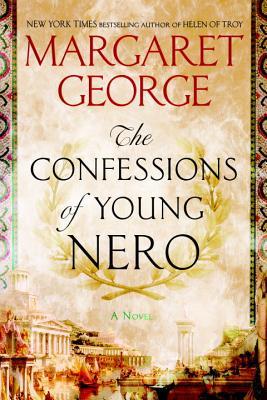
Spotlight: The Confessions of Young Nero by Margaret George

The CONFESSIONS OF YOUNG NERO

Berkley Paperback Reprint
March 20, 2018
ISBN: 9780451473394
$18.00


Behind each Roman Emperor’s climb to power lie the grand ambitions and chilling machinations of those closest to him. And none match the spectacularly theatrical and fraught sequences that carried a sixteen-year-old boy from the periphery of the royal family directly into the palace and then placed him on its throne.

New York Times bestselling author Margaret George has brought history to vivid life with her critically-acclaimed biographical novels of historical figures including Helen of Troy, Mary Magdalene, Cleopatra, Mary Queen of Scots, and Henry VIII. Now, she casts her eye to the last member of Julius Caesar’s dynasty, to remold and humanize the boy of whom history has made a caricature. Emperor Nero, who ascended to Rome’s ultimate seat of power at sixteen, is enshrined in popular memory as a hedonist, a tyrant, and cunning executioner. But the truth behind the caricature reveals a boy, an artist, an athlete, and a ruler who was both a product of his time and his mother Agrippina’s relentless ambition.

THE CONFESSIONS OF YOUNG NERO is written, like Robert Graves’s I, Claudius, in the form of an autobiography. It reveals with luminescent detail Nero’s complex talents and successes, his childhood, his rise to power, and his instinct for self-preservation which first took root on the moonlit night his insane uncle, the Emperor Caligula, tried to drown him.

Nero’s life—riddled with murders, rivalries, plots, orgies, and incest—is sensational on its own. But for George, THE CONFESSIONS OF YOUNG NERO is not just an opportunity to tell his story. It is an attempt to rehabilitate his image, and to expose the truth and complexities about both a man—and a time period—that has been much mythologized. George spent five years researching the novel, but her idea of resetting Nero’s villainous reputation has been building for more than thirty.

When he is just a small child, Nero’s mother, Agrippina, is released from exile by her elderly uncle—the newly crowned Emperor Claudius. Agrippina quickly plucks Nero from his modest upbringing, and embarks on a ruthless pruning of the family tree to ensure what she believes is her son’s rightful place in the Palace. Her naked ambition, cunning, and well-placed doses of poison help the obstacles fall one by one, until a teenage boy is given control of an Empire. Both tempted and terrified to assume his reign, Nero’s indoctrination into the incest, violence, luxury, and intrigue that have gripped Rome’s seat of power for generations will shape him into the man he was fated to become.

George covers the unfolding of Nero’s life and legacy, including his forced marriage to his cousin Octavia at fifteen; his passion for a beautiful ex-slave and other love affairs; the influence of the great philosopher Seneca on his reign; and his attentiveness to his political duties, including the improvement of Rome’s courts and public amenities. George uses Nero’s expansion of theatres, athletic games, chariot races, and musical performances as a window into the powerful artistic and athletic impulses that governed him, and which made him a champion of the common man—the men among whom he’d begun his life as “Lucius,” until fate made him forever “Nero.”

Like Mary Beard’s revisionist history of ancient Rome, SPQR, NERO both challenges our assumptions of that time period and taps into readers’ fascination with the Empire. Readers of Philippa Gregory will adore and find much to discover in George’s latest novel.

Monday, April 24, 2017

Blog Tour Guest Post: The Fisherman's Bride by Catherine Magia

Please join me in welcoming Catherine Magia to Let Them Read Books! Catherine is touring the blogosphere with her historical fiction debut, The Fisherman's Bride, a novel of the wife of St. Peter. Catherine is here today with a guest post about her own spiritual journey and the inspiration for giving a voice to a woman forgotten by history. Read on and enter to win a copy of The Fisherman's Bride!

She has no name. She is not even a footnote. Her tale is hidden behind the well-told fable of her husband, the man who would become Simon Peter, the first Apostle.

Cast off by her family after shunning a wealthy suitor to marry a humble fisherman, her life is fraught with hardship. She endures her husband’s growing restlessness, fish shortages from the Sea of Galilee, and the oppression of an all-powerful Roman Empire over her people. Then her life is forever changed when her dying mother is saved by a miracle performed by a young carpenter—a man who speaks with understanding and acts with compassion. A man who can inspire the extraordinary.

Simon Peter lives on in history as the undaunted martyr of the carpenter. This is the untold story of his young bride. Her journey traverses villages and deserts, love and tradition, and a brewing revolution, to an awakening of faith that challenges everything she has ever known.

My own spiritual journey inspired The Fisherman’s Bride, the journey from brokenness to healing. Eight years ago, I hit the lowest point in my life personally and professionally. I had post-surgical complications at the same time that I was laid off from my job and ended a long term relationship.  I was utterly lost. I traveled and wandered for about a year, searching for my path. Along the way, I learned lessons of authenticity, courage, and humility.  During a retreat in the Shenandoah Valley, being chased by cows with a Bible in hand, I discovered a new inspiration. I imagined the story of a woman who was also abandoned by her husband, a man who left without a word to follow Jesus, a man we know as Simon Peter.

Tuesday, March 7, 2017

Blog Tour Video Guest Post: The Confessions of Young Nero by Margaret George

THE CONFESSIONS OF YOUNG NERO
by Margaret George

Berkley Hardcover
On Sale: March 7, 2016
ISBN: 9780451473387

The New York Times bestselling and legendary author of Helen of Troy and Elizabeth I now turns her gaze on Emperor Nero, one of the most notorious and misunderstood figures in history.

Built on the backs of those who fell before it, Julius Caesar's imperial dynasty is only as strong as the next person who seeks to control it. In the Roman Empire no one is safe from the sting of betrayal: man, woman or child.

As a boy, Nero's royal heritage becomes a threat to his very life, first when the mad emperor Caligula tries to drown him, then when his great aunt attempts to secure her own son's inheritance. Faced with shocking acts of treachery, young Nero is dealt a harsh lesson: it is better to be cruel than dead.

While Nero idealizes the artistic and athletic principles of Greece, his very survival rests on his ability to navigate the sea of vipers that is Rome. The most lethal of all is his own mother, a cold-blooded woman whose singular goal is to control the empire. With cunning and poison, the obstacles fall one by one. But as Agrippina's machinations earn her son a title he is both tempted and terrified to assume, Nero's determination to escape her thrall will shape him into the man he was fated to become, an Emperor who became legendary.

With impeccable research and captivating prose, The Confessions of Young Nero is the story of a boy's ruthless ascension to the throne. Detailing his journey from innocent youth to infamous ruler, it is an epic tale of the lengths to which man will go in the ultimate quest for power and survival.


Praise for The Confessions of Young Nero:

“George’s reconstruction of the man, in terms both of his public life and private character, is more than a revisiting of fact: It’s a subtle exploration of identity and the insidious effects of power. . . . Confessions is all about identity: How is it made, lost, reinvented? . . . Margaret George occupies that blurry space between history and fiction. And between Tacitus and Margaret George, I rather think it’s George’s account that is not only most sympathetic but most truthful.”—Diana Gabaldon, Washington Post

“With conviction and flair, George looks past two millennia of bad press about Nero to reveal an intelligent man of justice and religious tolerance who takes refuge in artistic expression. This is the first of two novels charting his dangerous, outrageous life in first-century Rome; the second will be eagerly awaited.”—Booklist


“Highly acclaimed for the detail and personality she gives to epic subjects, George’s heavily researched novel flows dynamically among multiple points of view. VERDICT: Historical fiction devotees and anyone who enjoys the entertainment of a grandly dysfunctional family will quickly devour this first volume of a duology and eagerly await its sequel.”—Library Journal


GIVEAWAY!

Tuesday, October 25, 2016

Blog Tour Guest Post: Roma Amor by Sherry Christie

Please join me in welcoming author Sherry Christie to Let Them Read Books! Sherry is touring the blogosphere with her debut historical fiction novel, Roma Amor: A Novel of Caligula's Rome, and, just in time for Halloween, she's here with a guest post about spirits in the ancient world. Read on and enter to win a paperback copy of Roma Amor!

Marcus Carinna hears a voice whisper, “Your turn,” as he rides past his family tomb. An unseen presence also startles the Germanic priestess Aurima, whom he is bringing to Rome. But hardheaded Romans scoff at ghosts, and Marcus can’t believe it’s a warning from his brother, who killed himself three years earlier.

37 AD: To great acclaim, 25-year-old Caligula Caesar has become Rome’s new master. No one is more pleased than Senator Titus Carinna, who helped him succeed to the throne. It’s a shame the Senator’s older son–Caligula’s closest friend–committed suicide after being charged with treason. But that still leaves Marcus, his second son.

Headstrong and hot-tempered, Marcus would rather prove his courage by leading legions against Rome’s enemies than take his brother’s place. Yet when his father orders him to befriend Caligula, he has no choice.

Caught in a web of deceit, conspiracy, and betrayal, he will uncover a secret that threatens his family, the woman he desires, even his life . . . and may bring chaos to the young Roman Empire.

“The first installment in a page-turning saga that revisits the heroes and villains of the grandest city of the ancient world . . . Comes alive with the long gone characters who were its lifeblood” -Kirkus Reviews

‘‘Combines current political concerns, the wide lens of the serious historical novel, and emotional maturity and realism with an utterly splendid grasp of what it must have been like to live in Rome under Caligula’s reign.” -Sarah Smith, Agatha Award winner and New York Times Notable author

Amazon | Barnes & Noble | IndieBound


Gods, Ghosts, and Germans in Caligula’s Rome
by Sherry Christie

Thank you, Jenny Q, for a chance to share some of the paranormal possibilities I explored while writing my first novel, ROMA AMOR, about Caligula’s Rome.

Right from the beginning, there’s tension between a main character who doesn’t believe in spirits and another who does. The scene is set in Chapter 1 when headstrong, hot-tempered Marcus Carinna, riding home from military service on the Danube frontier, hears a voice whisper, “Your turn, little brother,” as he passes his family tomb:

I whipped my head around so quickly that my helmet crest tugged at its lashings. No one was near enough to have spoken so softly to me.
Little brother . . . ? 
By Mithras’s Dog! What made me imagine ghostly whispers from a dead man?

Wednesday, December 23, 2015

Blog Tour Review: The Last Wife of Attila the Hun by Joan Schwighardt

From the Back Cover:

Two threads are flawlessly woven together in this sweeping historical novel. In one, Gudrun, a Burgundian noblewoman, dares to enter the City of Attila to give its ruler what she hopes is a cursed sword; the second reveals the unimaginable events that have driven her to this mission.

Based in part on the true history of the times and in part on the same Nordic legends that inspired Wagner’s Ring Cycle and other great works of art, The Last Wife of Attila the Hun offers readers a thrilling story of love, betrayal, passion and revenge, all set against an ancient backdrop itself gushing with intrigue. Lovers of history and fantasy alike will find realism and legend at work in Joan Schweighardt’s latest offering.

My Thoughts:

I love learning about different eras in history. In a sea of novels about Tudors and French rulers, Huns can be hard to find. So I jumped at the chance to read this. Warning: If you are not familiar with the particulars of Attila's life, be careful when reading reviews. One review spoiled the ending for me in the opening paragraph by claiming it was common knowledge, but it wasn't for me. I knew next to nothing about Attila's life. And even when I do know a historical figure's life story, I still don't like having the manner in which the story ends spoiled for me. So this review will be relatively spoiler free!

The Last Wife of Attila the Hun is a mash-up of mythology and historical fiction, based in large part on the Poetic Edda and the Norse legends of Sigurd and Gudrun, where one of the characters is believed to be based on Attila, and there are several different versions of their stories. So if you're looking for a factual fictionalization of Attila the Hun, this isn't it. Rather, this is a story of what could have been if the old tales are to be believed, and I really like the way the author took these myths and wove them into the historical time frame. It gives the story a magical, otherworldly feeling and pays tribute to a woman who is often overshadowed by her rival, Brunhild, the valkyria who comes between Gudrun and her true love, Sigurd.

Monday, December 14, 2015

Blog Tour Q&A with Eileen Stephenson, Author of Tales of Byzantium

I am so thrilled to have Eileen Stephenson here today with her debut short story collection, Takes of Byzantium! I was honored to work on this book with Eileen in an editorial capacity, and I designed the cover too. Eileen is touring the blogosphere with Historical Fiction Virtual Book Tours, and I had the chance to ask her a few questions about her favorite Byzantines. Read on and enter for your chance to win a paperback copy of Tales of Byzantium!

A young empress defies her powerful father for love and her rightful place on the throne.

A charismatic commander takes the gamble of a lifetime to save the lives of thousands of innocents.

An exiled princess finds a new sense of purpose and creates a legacy that will stand through the ages.

These stories provide a glimpse of the dynamic and proud Byzantines who lived during the height of the empire’s splendor.

“Through elegantly described details, sharply observed characters, and especially crisp, modern-sounding dialogue, Stephenson takes these vignettes from the thousand years of Byzantine history, mixes them liberally with such excellent modern narrative histories as John Julius Norwich’s A Short History of Byzantium, and manages to create three very intriguing windows into a part of history largely unknown to many readers.” -Anne McNulty, Historical Novel Society Indie Reviews

Hi Eileen! Thank you so much for taking the time to visit Let Them Read Books! What sparked your interest in the Byzantines?

It was one book – A Short History of Byzantium by John Julius Norwich. I was at the library looking for something to read and borrowed it when I couldn’t find anything more interesting. Little did I realize that this small book, which Norwich considers the “lite” version of his comprehensive three-volume history, would lead me down a path I never expected to be on.

How did you determine who to write about for this collection?

There are so many fascinating stories of the Byzantines, but it is the middle period that inspires me. The first story, about the Emperor Constantine Porphyrogenitus and his wife, Helena Lecapena, is an improbable love story of two people who had no reason to like each other, until they did. I recognized the great story potential they had when I first read about them in Norwich’s book.

I first read about Manuel Comnenus and his defense of Nicaea in one of my research books, a translation of John Skylitzes’ history. His descendants would establish a great dynasty and bring the empire back from the brink of collapse. I found his ingenious way out of his predicament in Nicaea both daring and amusing and thought he deserved a story.

The story of Anna Comnena, although the last in the book, was the first I wrote. She was also the great granddaughter of Manuel Comnenus in the second story and the earliest female historian. She was thwarted in her attempts to reach the throne, but found purpose and redemption in writing a history of her father’s reign instead. A story about the strange course our lives can take on our way to our destiny.

Wednesday, November 18, 2015

Blog Tour Guest Post + Giveaway: A Year of Ravens

Please join me in welcoming the authors of A Year of Ravens: A Novel of Boudica's Rebellion to Let Them Read Books! Last year, I was seriously impressed by A Day of Fire: A Novel of Pompeii, their first collaboration on a novel told in parts (though a few of the authors have changed this time around). I called it "genius in its design" and named it to my Best of 2014 list.

I was honored to get the chance to provide some editorial assistance on A Year of Ravens, and I have to tell you, I think it is even better than A Day of Fire. It was a very emotional read for me. I laughed, I cried, I got angry, I felt sick, I despaired. I sat in awe of the magic that flowed from all of their pens. You're gonna love it. Read on to learn how this gifted group pulled it all together and then enter for a chance to win an awesome set of jewelry inspired by the book!

Britannia: land of mist and magic clinging to the western edge of the Roman Empire. A red-haired queen named Boudica led her people in a desperate rebellion against the might of Rome, an epic struggle destined to consume heroes and cowards, young and old, Roman and Celt . . . and these are their stories.

A calculating queen sees the sparks of revolt in a king’s death.

A neglected slave girl seizes her own courage as Boudica calls for war.

An idealistic tribune finds manhood in a brutal baptism of blood and slaughter.

A conflicted warrior hovers between loyalty to tribe and loyalty to Rome.

A death-haunted Druid challenges the gods themselves to ensure victory for his people.

An old champion struggles for everlasting glory in the final battle against the legions.

A fiery princess fights to salvage the pieces of her mother’s dream as the ravens circle.

A novel in seven parts, overlapping stories of warriors and peacemakers, queens and slaves, Romans and Celts who cross paths during Boudica’s epic rebellion. But who will survive to see the dawn of a new Britannia, and who will fall to feed the ravens?

The Magic of Collaboration
In Historical Fiction

Creativity, Steve Jobs once said, “is just connecting…and synthesizing new things.” One author writing one story is often quite limited in making new connections about a historical event or figure. But seven authors on one story can make unexpected and surprising connections in ways that transform storytelling.

That’s what the authors of the new collaborative novel about the ancient British warrior queen Boudica discovered while writing, A Year of Ravens: A Novel of Boudica’s Rebellion.

Tuesday, August 25, 2015

Blog Tour Excerpt: Roman Mask by Thomas M.D. Brooke

Publication Date: June 29, 2015
CreateSpace
Formats: Kindle & Paperback
Pages: 388
Genre: Historical Fiction/Adventure/Action


Rome AD 9

Augustus Caesar rules Imperial Rome at the height of its power, as the Roman Empire stretches across the known world. Cassius, son of one of her most powerful families, is the personification of Rome’s imperial strength: wealthy, popular, a war hero with a decorated military career – none of Rome’s fashionable parties are complete without him – except, he hides a secret.

After his nerve is broken in Germany, the thought of genuine armed combat is enough to send him into a cold sweat of fear and shame. But this doesn’t dissuade him from living off a false reputation so he can continue a life of casual affairs, wine, and parties, as he is seduced by the many vices of Rome.

However his scandalous life is soon upset by a summons from the Emperor’s wife. It ends his happy decadent life and returns him to Germany to assist the Roman legions in their greatest ever trial, and the events that will resound down in history, in the dark forests of the Teutoburg…

Praise for Roman Mask:

“Thomas Brooke brings vividly alive the Rome of Augustus Caesar. Violent, sex obsessed – not unlike our own century – we see the savage pleasures of the ancient world through the eyes of a charming rake back from the wars with a not entirely justified reputation for heroism. Brooke’s debut is an undoubted success. I thoroughly enjoyed Roman Mask – the first of a series, I hope.” – David Roberts, Author of Sweet Poison and The Corinth crime novels.

Excerpt from Chapter One:

I awoke in my bed, feeling the softness of the finest quality linen cool against my bare skin. I half-opened my eyes to the late March sunshine that bathed my room in light. Instantly I shut them again at the sharp pain in my head. I tried to swallow the unpleasant taste in my mouth, but it was dry and parched, my throat raw. I turned away from the sunlight and tried to will myself back to sleep – surely it couldn’t be morning already? I hugged a small cushion to my stomach that was fighting for an equal consideration in my morning misery: it growled angrily and I groaned in discomfort. Oh by Hades, a hangover.

Monday, August 17, 2015

Quick Review: An Ember in the Ashes by Sabaa Tahir

From the Back Cover:

Set in a terrifyingly brutal Rome-like world, An Ember in the Ashes is an epic fantasy debut about an orphan fighting for her family and a soldier fighting for his freedom. It’s a story that’s literally burning to be told.

LAIA is a Scholar living under the iron-fisted rule of the Martial Empire. When her brother is arrested for treason, Laia goes undercover as a slave at the empire’s greatest military academy in exchange for assistance from rebel Scholars who claim that they will help to save her brother from execution.

ELIAS is the academy’s finest soldier—and secretly, its most unwilling. Elias is considering deserting the military, but before he can, he’s ordered to participate in a ruthless contest to choose the next Martial emperor.

When Laia and Elias’s paths cross at the academy, they find that their destinies are more intertwined than either could have imagined and that their choices will change the future of the empire itself.

My Thoughts:

I just loved this book! An Ember in the Ashes takes place in a fantasy world based on an ancient Roman-type society, where the military reigns supreme beneath the emperor, and people are grouped into a strict class hierarchy.

The story is told in alternating points of view by Elias, golden child of one of the empire's oldest, most influential families, top of his class in the military academy, the poster boy for the future of the empire . . . only he's not so sure he wants any part of it anymore. And by Laia, child of scholars, on the run after witnessing the brutal murder of her parents thanks to her brother's involvement with a group of rebels determined to topple the empire. Disguised as a slave, she infiltrates the academy in a quest for answers. Neither Elias nor Laia could predict what would happen when they crossed paths. As the trials to select the empire's next leader commence, both Elias and Laia will be faced with startling truths about the world they thought they knew, about their places in that world, and about the lengths they are each willing to go to stand up for what they believe in, and to reach for the lives they were meant to live.

Wednesday, July 8, 2015

Blog Tour Guest Post: Sword of the Gladiatrix by Faith L. Justice

Please join me in welcoming Faith L. Justice to Let Them Read Books! Faith is touring the blogosphere with her new book, Sword of the Gladiatrix, and she's here today to bust some gladiator myths! I had the pleasure of meeting Faith at last month's Historical Novel Society conference, and I am so excited to read this book! Read on and enter to win your own copy of Sword of the Gladiatrix!

Two women. Two swords. One victor.

An action-packed tale that exposes the brutal underside of Imperial Rome, Sword of the Gladiatrix brings to life unforgettable characters and exotic settings. From the far edges of the Empire, two women come to battle on the hot sands of the arena in Nero’s Rome: Afra, scout and beast master to the Queen of Kush; and Cinnia, warrior-bard and companion to Queen Boudica of the British Iceni. Enslaved, forced to fight for their lives and the Romans’ pleasure; they seek to replace lost friendship, love, and family in each other’s arms. But the Roman arena offers only two futures: the Gate of Life for the victors or the Gate of Death for the losers.

Busting Gladiator Myths
By Faith L. Justice

Thanks Jenny Q for hosting me on your beautiful blog (please give a shout out to your designer). (That's me! Thank you!) I almost hate to dirty it up with my brutal topic, but here goes. (Oh, we get dirty around here. Let her rip!) Before I researched Sword of the Gladiatrix, I got most of my ideas and impressions of gladiators from the media: Russel Crowe in Gladiator and (for those of us of a certain age) Kirk Douglas in Spartacus. More recently Starz had a fantastic (in more ways than one) show that ran for three seasons titled Spartacus: War of the Damned. All of these shows perpetuate some myths that I hope to bust wide open in this guest post.

Myth #1: All gladiators were men.

Most were, but not all. Here I’ll give Gladiator a weak thumbs up—they had women in chariots fighting against a group of men in a re-enactment” of a classic battle in an arena scene, but other than that, women gladiators don’t show up in most visual media. It’s left to us lowly writers to correct the balance. If you look closely, women in the arena show up in art, literature, and law. Sword of the Gladiatrix was inspired by a particular stone carving of two female gladiators that I saw in the British Museum. Tacitus, Suetonius, Dio, Martial, and Juvenal all write about female gladiators—usually (except for Martial) with some element of dismay or sarcasm. An organizer in Ostia brags on his tombstone that he was the first person to put women in the arena as fighters. My favorite evidence is in the law: The first Roman Emperor Augustus forbade recruiting noble and free women as gladiators. Nearly two hundred years later, Emperor Septimus Severus banned single combat by women in the arena. If women weren’t being recruited and fighting, why have a ban? Human nature being what it is, these prohibitions probably made the fights all the more popular because they were illegal. I’m sure female gladiatorial contests continued for some time.

Friday, March 27, 2015

Blog Tour Review: Lady of the Eternal City by Kate Quinn

From the Back Cover:

National bestselling author Kate Quinn returns with the long-awaited fourth volume in the Empress of Rome series, an unforgettable new tale of the politics, power, and passion that defined ancient Rome.

Elegant, secretive Sabina may be Empress of Rome, but she still stands poised on a knife’s edge. She must keep the peace between two deadly enemies: her husband Hadrian, Rome’s brilliant and sinister Emperor; and battered warrior Vix, who is her first love. But Sabina is guardian of a deadly secret: Vix’s beautiful son Antinous has become the Emperor’s latest obsession.

Empress and Emperor, father and son will spin in a deadly dance of passion, betrayal, conspiracy, and war. As tragedy sends Hadrian spiraling into madness, Vix and Sabina form a last desperate pact to save the Empire. But ultimately, the fate of Rome lies with an untried girl, a spirited redhead who may just be the next Lady of the Eternal City…

My Thoughts:

Kate Quinn has quickly become one of my favorite historical fiction authors. It's no small thing to weave a story with dozens of characters over three books and a forty-year time span and keep a reader hanging on every word. It takes true talent not only to bring history to life but to do so with (seemingly) effortless style and dignity. Kate now ranks among some pretty illustrious company on my shelf of honor, including Sharon Kay Penman, Elizabeth Chadwick, and Diana Gabaldon.

I have been dying to read Lady of the Eternal City ever since that cliffhanger ending of Empress of the Seven Hills. In that book, we watched as young Romans Sabina and Vix came of age as friends and lovers and then separated to follow their destinies, Vix to the legions and Sabina to the world of politics as wife of the rising legate Publius Hadrian. But their paths were fated to cross numerous times as Vix rose through the ranks and Sabina's husband became the favorite to follow Emperor Trajan.

This book opens with Hadrian's ascension to emperor and the execution of his rivals for the throne. Vix has been hardened by his hatred for the man he is forced to serve and the things he has been forced to do, and Sabina has become disillusioned and wary, hiding a huge secret from her increasingly erratic husband. The emotional tension in this novel runs at full-throttle as Hadrian cements his power, friends become enemies and enemies become friends, tragedy creates unlikely allies, and the future of an empire hangs in the balance. The plot is meticulously crafted from the beginning of Hadrian's reign to the end, encompassing war, religious strife, cultural awakenings, political machinations, and all of the very human emotions of the players who left their mark on the world during this time.

Wednesday, February 4, 2015

Book Blast: Red Fury Revolt by J.F. Ridgley

Please join author J.F. Ridgley as her novel, Red Fury Revolt, is featured around the blogosphere and enter to win a copy of the book plus a $25 Amazon Gift Card!

Publication Date: January 31, 2015
R Pride Publishing
eBook; 412p
ASIN: B00QJJFCYK
Genre: Historical Fiction
Series: Book One, The Agricola Series

Add to GR Button 


Something keeps drawing G. Julius Agricola to Britannia again and again…

This is where it starts… book one, Red Fury…Revolt A.D. 60…

Camulodunum! Londinium! Verulaneum!

Three towns writhe under the Iceni queen’s wrath, as she leads her warriors intent on destroying all things Roman – be it Roman temples, Roman villas, or entire families sympathetic to Rome. At stake is Suetonius Paulinus’s reputation. With only 80,000 legionaries, will he destroy Boudica or will he endure the disgrace in Rome for losing–to a woman?

Julius Agricola-Rome’s tribune, and Rhianna-Boudica’s youngest daughter, become ensnared in this horrific historical revolt against Roman injustice. Just as Julius and Rhianna reveal their love to each other, they are hurled back into the harsh reality of their differing worlds that are determined to destroy each other.

Who will survive?

Book two in the Agricola series, Red Fury Rebellion, coming 2016!

Praise for Red Fury Revolt


“…Ms. Ridgley has done very well at telling her story, while being respectful to the events that devastated Britannia, and even shook the Roman Empire itself, in 60 to 61 A.D.” - James Mace, Author of ‘Soldier of Rome – The Artorian Chronicles’

Watch the Book Trailer


Friday, December 5, 2014

Blog Tour Review ~ A Day of Fire: A Novel of Pompeii

From the Back Cover:

Pompeii was a lively resort flourishing in the shadow of Mount Vesuvius at the height of the Roman Empire. When Vesuvius erupted in an explosion of flame and ash, the entire town would be destroyed. Some of its citizens died in the chaos, some escaped the mountain's wrath . . . and these are their stories: 

A boy loses his innocence in Pompeii's flourishing streets. 
An heiress dreads her wedding day, not knowing it will be swallowed by fire. 
An ex-legionary stakes his entire future on a gladiator bout destined never to be finished. 
A crippled senator welcomes death, until a tomboy on horseback comes to his rescue. 
A young mother faces an impossible choice for her unborn child as the ash falls. 
A priestess and a whore seek redemption and resurrection as the town is buried. 

Six authors bring to life overlapping stories of patricians and slaves, warriors and politicians, villains and heroes who cross each others' path during Pompeii's fiery end. But who will escape, and who will be buried for eternity?

My Thoughts:

If you are fascinated by the fate of Pompeii and its residents and gobble up the documentaries on the history channels, like me, and recently watched the big Hollywood action flick Pompeii and were disappointed in it, as I was, treat yourself to A Day of Fire and prepare to immerse yourself in the heart of a city on the brink of destruction. I'd had the pleasure of reading four of the authors featured in this collection before, so I just knew this had to be good, and it was!

A Day of Fire was a unique read for me. I've read a few novella collections, but never was one constructed in such a way that all of the stories truly worked together to form a whole picture, and it's genius in its design. The stories follow the progression of the eruption of Mount Vesuvius, from the warning-filled days leading up to the eruption to the scramble for survival as ash and stone rain down on the streets to the final deathly silence that remains after the pyroclastic flow entombs the city.

The reader experiences this devastating event from the points of view of six main characters, the Son, the Heiress, the Soldier, the Senator, the Mother, and the Whore, and I loved the way featuring different people from different walks of life in different parts of the city combined to form such a complete picture of life in Pompeii. Even the manner in which these people were connected—friends of friends, business relationships, romantic encounters, common enemies, chance meetings—
underscored the humanity and sense of community in this hedonistic resort town where pleasures, and people, are bought and sold, and where everyone has an angle.

Thursday, June 12, 2014

Blog Tour Review: Curses and Smoke by Vicky Alvear Shecter

From the Back Cover:

When your world blows apart, what will you hold onto?

Tag is a medical slave, doomed to spend his life healing his master’s injured gladiators. But his warrior’s heart yearns to fight in the gladiator ring himself and earn enough money to win his freedom.

Lucia is the daughter of Tag’s owner, doomed by her father’s greed to marry a much older Roman man. But she loves studying the natural world around her home in Pompeii, and lately she’s been noticing some odd occurrences in the landscape: small lakes disappearing; a sulfurous smell in the air…

When the two childhood friends reconnect, each with their own longings, they fall passionately in love. But as they plot their escape from the city, a patrician fighter reveals his own plans for them — to Lucia’s father, who imprisons Tag as punishment. Then an earthquake shakes Pompeii, in the first sign of the chaos to come. Will they be able to find each other again before the volcano destroys their whole world?

My Thoughts:

I am loving the increase in young adult historical fiction titles. I read a lot of YA, and I'm all for anything that gets kids interested in history. So when I saw Curses and Smoke by Vicky Alvear Shecter, whose debut novel, Cleopatra's Moon, has been on my wishlist forever, I had to read it. And I loved it--mostly.

Tuesday, July 2, 2013

Blog Tour Review ~ The Secret History: A Novel of Empress Theodora by Stephanie Thornton

From the Back Cover:

Where Theodora went, trouble followed…

In sixth century Constantinople, one woman, Theodora, defied every convention and all the odds, and rose from being a common theater tart to become empress of a great kingdom, the most powerful woman the Roman Empire would ever know. But the woman whose image was later immortalized in glittering mosaic was, in fact, a scrappy, clever, conniving, flesh-and-blood woman full of sensuality and spirit whose real story is as surprising as any ever told…

When her father dies suddenly, Theodora and her sisters face starvation on the streets. Determined to survive, Theodora makes a living any way she can—first on her back with every man who will have her, then on the stage of the city’s infamous amphitheater in a scandalous dramatization of her own invention. When her daring performance grants her a back-door entry into the halls of power, she seizes the chance to win a wealthy protector—only to face heartbreak and betrayal. 

Ever resilient, Theodora rises above such trials and by a twist of fate, meets her most passionate admirer yet: the Emperor’s nephew. She will thrive as his confidant and courtesan, but many challenges lie ahead. For one day, this man will hand her a crown. And all the empire will wonder—is she bold enough, shrewd enough, and strong enough to keep it?

Tuesday, May 21, 2013

Teaser Tuesday + Review ~ HerStory: Fiction Honoring Women's History Month

This week I'm sharing two teasers from a short story collection I recently enjoyed featuring tales of strong women through various historical eras in honor of Women's History Month, edited by my book blogging buddy and author Tara Chevrestt.

From "Riverboat Queen":

     "What can I do for you officers this evening?" A man's voice spoke with a northern accent.
     "We're looking for a woman," replied another.
     "Aren't we all? I have a nice selection of ladies looking to please men of discerning tastes," said the smooth-talking Yankee.
     "We're looking for a murderess and we think she stowed away on your vessel, Captain."

From "In the Company of Spirits":

     People do come into one another's lives for various reasons, often unknown. Sometimes it is love that draws two together. Sometimes it is simply that one idea needs the vessel of another. Does that mean we were merely necessities to one another, to that glorious ideal?
     Perhaps.